
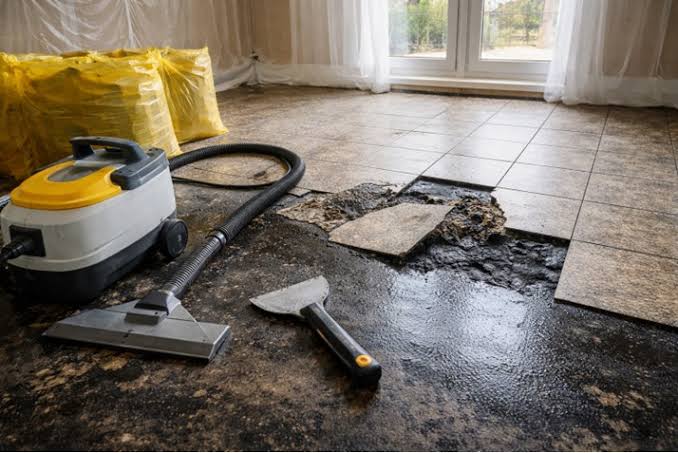

Asbestos floor tile remains hidden in many older homes, schools, offices and commercial buildings. It may appear as vinyl or asphalt tile, but asbestos can also be present in sheet-floor backing, underlayment, flooring felt or the adhesive beneath the finished surface.
You cannot confirm asbestos by looking at a floor. Nine-inch tiles, dark mastic, a speckled design and an older installation date may justify further investigation, but only laboratory testing can determine whether asbestos is present. The U.S. Environmental Protection Agency recommends professional sampling when suspect material is damaged or when a renovation will disturb it.
The most important rule is simple:
Do not sand, scrape, drill, grind, break or remove suspect flooring merely to identify it.
When old flooring is intact and will remain undisturbed, leaving it in place is often safer than removing it. When the material is damaged or renovation is planned, stop work and consult a trained asbestos professional.
What to Do Right Now
| Situation | Recommended response |
| Floor is intact and no renovation is planned | Leave it alone and monitor its condition |
| Flooring will be replaced or disturbed | Arrange professional assessment before work begins |
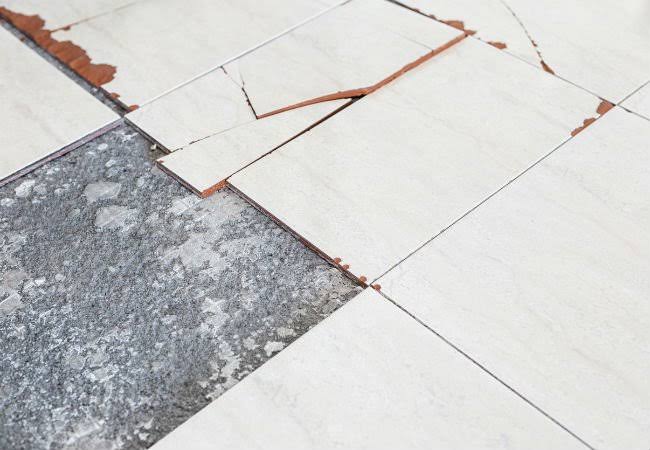
| Tiles are loose, cracked or missing | Limit access and obtain professional advice |
| Dust or broken debris is visible | Do not sweep or use a household vacuum |
| Sanding, scraping or removal has already started | Stop work, leave the area and contact an asbestos professional |
| New flooring will be installed over the old floor | Confirm that the existing floor is stable and that installation will not disturb it |
EPA advises homeowners not to dust, sweep or vacuum debris that may contain asbestos. It also says not to saw, sand, scrape, drill or attempt to level asbestos flooring or its backing.
What Is Asbestos Floor Tile?
Asbestos floor tile is resilient flooring manufactured with asbestos fibers or installed using another asbestos-containing material. Manufacturers used asbestos because it was strong, durable, heat-resistant and resistant to wear.
Asbestos may be found in:
- Vinyl-asbestos floor tiles
- Asphalt floor tiles
- Certain thermoplastic tiles
- Some older rubber flooring products
- Vinyl sheet-floor backing
- Felt underlayment
- Flooring paper
- Linoleum backing
- Black cutback mastic
- Other flooring adhesives
- Some older cement or magnesite flooring products
EPA homeowner guidance specifically identifies resilient floor tiles, vinyl-sheet backing and flooring adhesives as materials that may contain asbestos.
The visible tile is only one part of the flooring system. A floor can contain several layers:
- New carpet, vinyl, laminate or another finish
- Older vinyl or asphalt tile
- Felt or paper backing
- Mastic or adhesive
- Concrete, plywood or another subfloor
Each layer may have a different composition. The tile may test negative while the adhesive tests positive, or the reverse may occur.
Where Is Asbestos Flooring Commonly Found?
Older asbestos flooring may be found in:
- Basements
- Kitchens
- Bathrooms
- Laundry rooms
- Hallways
- Entryways
- Utility rooms
- Schools
- Hospitals
- Offices
- Retail buildings
- Apartment common areas
- Workshops
- Mechanical spaces
It may also remain beneath carpet, laminate flooring, hardwood, ceramic tile or newer sheet vinyl. Commercial guides commonly report 9×9, 12×12 and 18×18-inch formats and note that older tiles are often discovered beneath later floor coverings. These are useful clues but cannot establish asbestos content.
Do not pull up securely installed carpet, pry up a tile or remove trim merely to inspect what lies underneath. Investigation that damages the floor can create the very exposure risk you are trying to avoid.
What Does Asbestos Floor Tile Look Like?
Asbestos floor tile has no unique visual appearance. It was manufactured in many colors, patterns, sizes and thicknesses, including designs that look almost identical to asbestos-free products.
Possible clues include:
| Visual or historical clue | What it means |
| 9×9-inch tile | Common historic format, but not proof |
| 12×12 or 18×18-inch tile | Some asbestos products used these sizes |
| Speckled or marbled design | Found in both asbestos and non-asbestos flooring |
| Checkerboard floor | A popular historic style, not a diagnostic feature |
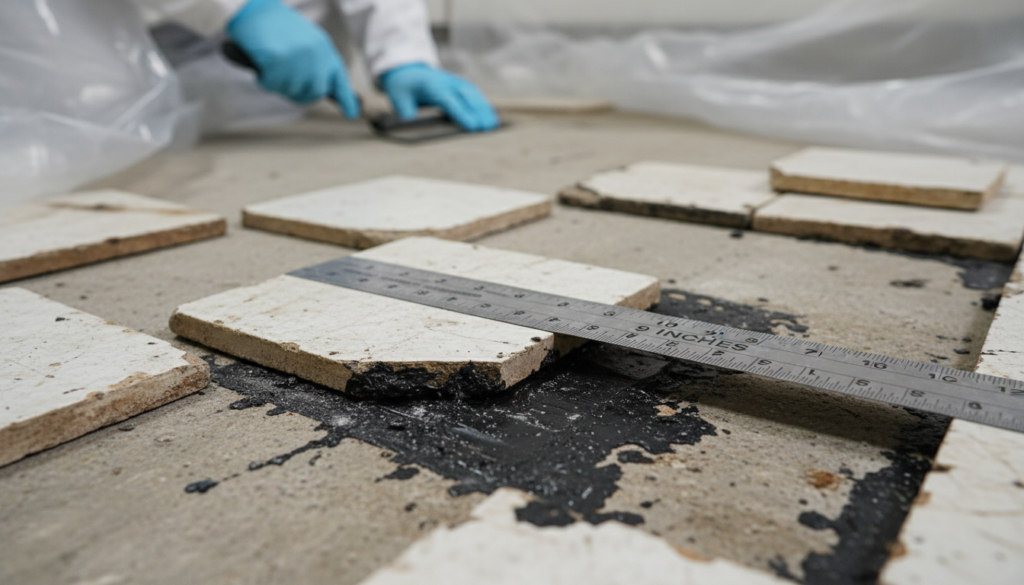
| Dark, tar-like adhesive | May be black cutback mastic |
| Gray or white felt backing | May be suspect sheet-floor backing |
| Older installation | Raises suspicion but does not prove composition |
| Brittle, loose or lifting tile | Indicates deterioration, not necessarily asbestos |
| Flooring hidden under carpet | May be an older retained floor layer |
EPA states that building materials generally cannot be identified as asbestos-containing simply by looking at them. If there is doubt, the agency recommends treating the material as suspect and leaving it alone until it can be evaluated properly.
Are All 9×9 Floor Tiles Asbestos?
No. A 9×9-inch tile is one of the best-known warning signs because that size was common among historic vinyl-asbestos and asphalt tiles. However, size alone cannot prove that a tile contains asbestos.
Likewise, a larger tile is not automatically safe. Some suspect products were manufactured in 12×12 and 18×18-inch sizes, while asbestos-free products were also sold in similar formats.
Use the tile’s dimensions as a screening clue only. Never use measurements as a substitute for laboratory testing.
Do Certain Colors Indicate Asbestos?
No color proves that asbestos is present.
Historic tiles appeared in:
- Cream
- Beige
- Gray
- Black
- Brown
- Blue
- Green
- Teal
- Red
- Maroon
- Pink
- Multicolored patterns
Some commercial websites claim that green flecks or visible strands are asbestos fibers. That is not a reliable identification method. Individual asbestos fibers are microscopic, and decorative pigments, fillers and aggregates can create similar appearances. ATSDR explains that released asbestos fibers are too small to see.
Can You Identify Asbestos From a Photograph?
No. A photograph may help establish that a floor is old or resembles a known historic style, but it cannot reveal the mineral content of the tile, backing or adhesive.
A responsible photo caption should say:
This flooring has features associated with some older resilient tiles, but asbestos cannot be confirmed visually.
Avoid captions that label a photographed floor as asbestos unless its laboratory result and sample provenance are known.
When Was Asbestos Used in Floor Tiles?
Asbestos was used in U.S. flooring and other building materials throughout much of the twentieth century. Manufacturers changed their formulations at different times, and old inventory could remain in circulation after production practices changed.
Consequently, there is no single cutoff date that proves a floor is asbestos-free.
Flooring installed before 1980 deserves additional caution, especially in workplaces. OSHA requires employers and building owners to treat certain older installed asphalt and vinyl flooring as asbestos-containing unless its absence has been demonstrated using recognized analytical methods. This occupational presumption is not the same as saying that every pre-1980 household tile contains asbestos.
Safer homeowner wording is:
Older flooring may contain asbestos and should be treated as suspect when damage or renovation could disturb it.
Is Asbestos Flooring Still Legal in the United States?
The history is more complicated than a single nationwide ban.
EPA’s 1989 rule attempted to prohibit many asbestos products, but a court overturned much of it in 1991. As a result, only certain products remained banned. In 2019, EPA adopted a significant-new-use rule preventing discontinued products—including vinyl-asbestos floor tile—from returning to the market without EPA review.
EPA finalized a rule in March 2024 banning ongoing uses of chrysotile asbestos through product-specific phaseout schedules. However, that action does not remove legacy asbestos floor tile already installed in older buildings. EPA’s later risk evaluation specifically considers legacy materials such as floor tiles, ceiling tiles, insulation and pipe wrap.
Therefore, homeowners can still encounter asbestos flooring even though similar products are no longer being newly installed in ordinary residential construction.
What Is Black Mastic?
Black mastic, also called black cutback adhesive, is a dark, tar-like material historically used to attach floor tiles and other floor coverings.
It may appear:
- Black or very dark brown
- Thick and tar-like
- Smooth or ridged from a notched application tool
- Dry and hard
- Sticky in isolated areas
- Partly covered by tile fragments or backing
Some black flooring adhesives contained asbestos. However, black color alone cannot prove that a mastic contains asbestos.
The adhesive must be evaluated separately from the tile. Possible test results include:
- Positive tile and positive mastic
- Positive tile and negative mastic
- Negative tile and positive mastic
- Negative tile and negative mastic
Asbestos.com identifies backing, flooring felt and black mastic as separate suspect flooring components. OSHA likewise treats flooring, backing and associated mastic as materials requiring appropriate evaluation in regulated workplace projects.
Do not lift an intact tile merely to check for black mastic. If the floor will not be disturbed, exposing the adhesive may create an unnecessary problem.
Is Asbestos Floor Tile Dangerous?
Asbestos floor tile is often a bonded, nonfriable material when intact. The fibers are held within vinyl, asphalt or another matrix, so an undamaged tile is generally less likely to release fibers than loose insulation or badly deteriorated sprayed material.
That does not mean the tile is harmless. Risk rises when the material is:
- Sanded
- Ground
- Sawed
- Drilled
- Cut
- Scraped
- Mechanically chipped
- Broken into small fragments
- Aggressively removed
- Deteriorated through water or physical damage
- Disturbed along with backing or adhesive
EPA says material in good condition that will not be disturbed is generally best left alone. It also notes that cutting, tearing, sanding, drilling, scraping, improper removal and significant damage can release asbestos fibers.
OSHA classifies occupational removal of asbestos-containing floor tile, sheeting and construction mastics as Class II asbestos work. The standard prohibits sanding asbestos flooring and requires specific controls for regulated workplace removal.
Does a Cracked Tile Automatically Become Friable?
No. A crack does not automatically mean a resilient floor tile has become friable.
Friability concerns whether dry material can be crumbled, pulverized or reduced to powder by hand pressure. A cracked tile may remain hard and bonded. Nevertheless, cracking can make fragments easier to disturb, expose backing or adhesive, and complicate future renovation.
Avoid unsupported statements such as:
- Every crack continuously releases fibers.
- Any air movement creates an exposure.
- All damaged tiles are immediately friable.
- One broken corner makes the entire room unsafe.
Instead, describe what is actually observable:
Several tiles are cracked and loose. Because their asbestos content is unknown and the damaged areas could be disturbed, professional assessment is recommended.
Health Risks of Asbestos Exposure
Asbestos becomes a health concern when fibers enter the air and are inhaled. The fibers can become lodged in the lungs and surrounding tissues.
Diseases associated with asbestos exposure include:
- Mesothelioma
- Lung cancer
- Asbestosis
- Pleural disease
- Laryngeal cancer
- Ovarian cancer
Symptoms may not appear for decades. ATSDR notes that signs of mesothelioma may take approximately 30 to 40 years to develop and that asbestos exposure is associated with both cancer and noncancer disease.
Risk varies according to factors such as:
- Amount of fibers inhaled
- Frequency of exposure
- Duration of exposure
- Type and condition of the material
- Intensity of the disturbing activity
- Whether controls were used
- Smoking history, particularly for lung-cancer risk
A brief encounter does not prove that a person will become ill. However, unnecessary exposure should always be prevented.
How Is Asbestos Floor Tile Tested?
The only reliable way to determine whether a floor tile contains asbestos is to have representative material analyzed by a qualified laboratory.
Testing may need to address several distinct components:
- Tile
- Sheet-floor backing
- Felt
- Underlayment
- Adhesive or mastic
- Leveling material
- Additional concealed flooring layers
EPA recommends testing when suspect material is damaged or when a renovation will disturb it. Samples should be collected by a trained and accredited asbestos inspector because incorrect sampling can be more hazardous than leaving the material alone.
Why Visual Inspection Is Not Enough
A visual inspection can answer questions such as:
- Where is the flooring located?
- Is it intact or damaged?
- What size are the tiles?
- Is adhesive exposed?
- Will planned construction disturb it?
- Are additional layers concealed?
It cannot determine whether asbestos fibers are present.
Laboratory analysis is what converts “suspect material” into a confirmed positive or negative result.
Should You Use a Home Asbestos Test Kit?
A commercial kit usually provides packaging and laboratory analysis, but it still requires someone to collect the sample.
That collection step is where unnecessary exposure can occur. Cutting a tile, scraping adhesive or pulling up backing may release fibers or spread debris. EPA therefore advises against homeowner sampling and recommends using a properly trained professional.
A professional can also decide whether separate layers need separate samples. Testing only the visible tile could miss asbestos in the mastic or backing.
Is Air Testing the Same as Tile Testing?
No.
Bulk-material testing determines whether a specific tile, adhesive or backing contains asbestos. Air testing measures fibers present in the air during a particular sampling period.
Air testing cannot normally replace bulk testing when the question is:
Does this floor tile contain asbestos?
Air monitoring may be used during or after certain abatement projects, but it answers a different question and must be interpreted within the project’s regulatory and technical context.
What Should You Do With Intact Asbestos Floor Tile?
If confirmed or suspected asbestos floor tile is in good condition and no work will disturb it, leaving it in place may be the safest approach.
EPA says undamaged asbestos-containing material that will not be disturbed does not ordinarily need to be tested and should generally be left alone.
Practical management may include:
- Avoiding drilling or fastening through the floor
- Preventing dragging or impact damage
- Monitoring for loose or missing tiles
- Addressing water leaks promptly
- Recording the floor’s location
- Informing future contractors
- Reassessing before renovation
Do not label the floor “safe forever.” Future work, water damage or deterioration may change the appropriate response.
Can You Cover Asbestos Floor Tile?
Yes, covering intact flooring may sometimes be an appropriate management strategy.
EPA specifically advises installing new floor covering over asbestos flooring when possible rather than sanding or leveling the old material.
Possible coverings include:
- Floating laminate
- Floating luxury vinyl plank
- Engineered floating floors
- Carpet systems
- Certain sheet flooring products
- Approved underlayment and overlay systems
However, covering is not simply a matter of placing any material over the floor. A qualified professional should consider:
- Whether the tiles are firmly attached
- Whether tiles are cracked or missing
- Moisture conditions
- Subfloor stability
- Flatness
- Floor-height transitions
- Door clearance
- Stair geometry
- Compatibility with adhesives
- Whether fasteners are required
- Future renovation plans
- Local building and asbestos rules
Do not sand, grind or mechanically level suspect flooring to prepare it for an overlay.
Covering also does not remove the asbestos. The material should remain documented so a future owner or contractor does not unknowingly drill, sand or remove it.
Is Covering the Same as Encapsulation?
Not exactly.
Enclosure means placing a barrier or new covering over the asbestos-containing material.
Encapsulation means applying a specialized coating or treatment intended to bind or seal fibers.
EPA says repair may involve sealing or covering asbestos material, but the asbestos remains in place. Such work should be performed by someone trained to handle asbestos safely.
Do not assume that ordinary paint, PVA glue, wood adhesive or a generic floor primer is an approved asbestos encapsulant. Product suitability depends on its tested use, the material and applicable regulations.
When Should Asbestos Floor Tile Be Removed?
Removal may be considered when:
- Tiles are extensively damaged
- The floor is loose or deteriorating
- Renovation will unavoidably disturb it
- The subfloor needs major repair
- Moisture has damaged the flooring system
- Demolition is planned
- Covering is technically unsuitable
- Local regulations require removal
- The building’s future use makes management in place impractical
EPA says removal may be needed when renovation will disturb asbestos-containing material or when the material is too damaged to repair. It warns that improper removal can increase exposure.
Why Asbestos Removal Is Not Normal Tile Removal
Ordinary flooring removal may involve:
- Power scrapers
- Grinders
- Sanders
- Chipping tools
- Dry sweeping
- Shop vacuums
- Breaking tiles into manageable pieces
Those methods can be unsuitable or prohibited when asbestos is involved.
OSHA’s construction standard prohibits sanding flooring and dry sweeping during regulated work. It requires specific controls for removal of asbestos-containing resilient flooring and states that tiles should be removed intact where feasible.
These occupational requirements illustrate why a respirator and disposable suit alone do not make a DIY project safe. Proper abatement also involves containment, training, controlled methods, cleanup, waste packaging and regulatory compliance.
Can a Homeowner Remove Asbestos Floor Tile?
The legal answer varies by location.
Federal law does not require every person working in a detached single-family home to hold federal asbestos accreditation. However, states and local governments may impose stricter licensing, notification, work-practice and disposal rules. EPA recommends that homeowners use trained and accredited workers regardless of whether federal accreditation is mandatory for the particular house.
Rules may differ for:
- Detached single-family homes
- Rental properties
- Condominiums
- Apartment buildings
- Commercial properties
- Schools
- Public buildings
- Employer-directed work
- Demolition projects
Never convert “not federally required in one setting” into “safe to do yourself.”
How to Hire an Asbestos Professional
Two main roles may be involved:
Asbestos Inspector
An inspector can:
- Examine the building
- Identify suspect materials
- Assess condition
- Collect samples
- Arrange laboratory analysis
- Provide written findings
- Recommend management, repair or removal
Asbestos Contractor
A contractor can:
- Repair asbestos-containing material
- Encapsulate or enclose it
- Remove it
- Package and transport regulated waste
- Perform project cleanup
EPA advises homeowners to avoid conflicts of interest by using an assessment professional who is independent of the company performing removal when possible. It also recommends checking training, accreditation, performance history and reported safety violations.
Questions to ask include:
- Are you licensed or accredited for this work in my jurisdiction?
- Will the tile, backing and adhesive be assessed separately?
- Which laboratory will analyze the samples?
- What work practices will be used?
- How will adjacent rooms and HVAC systems be protected?
- Where will the waste be disposed?
- Is clearance inspection or air monitoring required?
- Will I receive a written report and disposal records?
- Does your insurance cover asbestos work?
- Are the inspector and removal contractor independent?
Asbestos Floor Tile Under Carpet
Old tiles are frequently discovered when carpet is replaced.
Potential complications include:
- Tack strips driven through tiles
- Broken tiles along room edges
- Adhesive attached to carpet backing
- Hidden debris beneath padding
- Several concealed flooring layers
- Unknown condition across the room
Do not pull up more carpet simply to investigate. If carpet removal has already exposed suspect tiles, pause the project until the flooring can be assessed.
A useful inspection report statement is:
Flooring visible beneath the carpet appears similar to older resilient material that may contain asbestos. No sampling or laboratory analysis was performed during this inspection. Its asbestos content cannot be determined visually. Obtain qualified assessment before removing the carpet or disturbing the tile, backing or adhesive.
Can You Install New Flooring Over Asbestos Tile?
It may be possible when the existing floor is intact, stable, dry and suitable for the new flooring system.
Laminate Flooring
Floating laminate may sometimes be installed without penetrating the original floor. However, the substrate must meet the manufacturer’s flatness and moisture requirements. Do not grind high spots in suspect flooring.
Luxury Vinyl Plank
Floating vinyl plank may also avoid adhesive and fasteners. Nevertheless, damaged tiles, moisture and transitions must be addressed first.
Carpet
Carpet may be installed over a suitable intact floor, but tack strips and mechanical fasteners can penetrate the underlying material. The installation method should be reviewed before work begins.
Ceramic Tile
Ceramic tile systems may require primers, mortar, membranes, fastening or substrate preparation. Do not proceed until a flooring professional and asbestos professional have confirmed that the method will not disturb suspect material.
Hardwood Flooring
Nail-down hardwood is generally unsuitable over retained asbestos flooring because fasteners penetrate the floor. A floating system may be possible, subject to professional review.
What If You Already Disturbed the Floor?
Stop work immediately.
Do not:
- Continue removing tiles
- Sweep the debris
- Use a household vacuum
- Carry fragments through the home
- Wash contaminated clothing with normal laundry
- Turn the project into an improvised cleanup
- Run fans to clear the room
Keep people and pets away from the area and contact an asbestos professional or the appropriate state environmental agency for situation-specific advice. EPA warns against sweeping or vacuuming suspect debris and advises professional help when damaged asbestos material or a large cleanup is involved.
A single broken tile does not prove that the entire house is contaminated. The appropriate response depends on what material was disturbed, how it was disturbed, how long the work continued and whether dust migrated.
How Is Asbestos Floor Tile Waste Disposed?
Asbestos waste cannot be handled like ordinary construction debris in many jurisdictions.
Rules may regulate:
- Packaging
- Labeling
- Wetting
- Transport
- Approved disposal sites
- Waste manifests
- Notification
- Recordkeeping
- Who may perform the work
EPA explains that federal, state and local agencies may all have authority over a project and that regulations can include notification, fees, work practices, disposal and recordkeeping.
Contact the relevant state or local asbestos program before work begins. EPA maintains a directory of state asbestos contacts, including agencies responsible for removal, licensing, workplace compliance and disposal.
How Much Does Testing or Removal Cost?
There is no reliable nationwide price for asbestos floor tile work.
Cost depends on:
- Number of samples
- Number of flooring layers
- Whether tile and mastic need separate testing
- Room size
- Tile condition
- Accessibility
- Furniture removal
- Containment requirements
- Whether mastic must also be removed
- Local labor rates
- Notification and permit fees
- Waste volume
- Disposal distance
- Clearance requirements
- Emergency scheduling
Commercial pricing guides may be useful for obtaining a rough local range, but their figures should not be presented as universal. Get itemized quotes from qualified local firms and ask whether laboratory fees, mastic removal, disposal and clearance are included.
Common Myths About Asbestos Floor Tile
Myth 1: Every 9×9 Tile Contains Asbestos
False. It is a warning sign, not proof.
Myth 2: A 12×12 Tile Cannot Contain Asbestos
False. Some larger historic tiles contained asbestos.
Myth 3: Black Mastic Is Always Asbestos
False. It requires separate analysis.
Myth 4: Green Flecks Are Visible Asbestos Fibers
False. Color and decorative speckles cannot identify asbestos.
Myth 5: A Photo Can Confirm Asbestos Tile
False. Confirmation requires laboratory analysis.
Myth 6: One Crack Makes the Tile Friable
Not automatically. Damage matters, but friability has a specific technical meaning.
Myth 7: Intact Asbestos Tile Must Always Be Removed
False. Material in good condition is often managed in place.
Myth 8: Covering the Floor Removes the Hazard Forever
False. The asbestos remains and must be documented.
Myth 9: A Dust Mask Makes DIY Removal Safe
False. Asbestos work requires far more than a disposable mask.
Myth 10: A Normal Vacuum Can Clean Asbestos Dust
False. EPA says homeowners should not vacuum suspect asbestos debris.
Frequently Asked Questions
You cannot tell by looking at it. Tile size, age, pattern and black mastic may raise suspicion, but laboratory testing is required for confirmation. EPA recommends professional sampling when the material is damaged or will be disturbed.
Historic suspect tiles are often associated with 9×9-inch dimensions, but 12×12 and 18×18-inch products also existed. Size is not proof.
Intact, undisturbed flooring is generally less likely to release fibers. The risk increases when it is cut, sanded, drilled, scraped, broken or removed improperly.
EPA generally does not recommend testing undamaged material that will not be disturbed. Sampling itself can create avoidable risk.
Possibly, if the tiles are intact and the system can be installed without sanding, drilling or other disturbance. Obtain professional advice about moisture, flatness and floor transitions first.
Yes. The tile and adhesive are separate materials and may produce different test results.
Paint is not automatically a suitable asbestos encapsulation system. The floor condition, coating compatibility, foot traffic and product approval must be evaluated professionally.
Sheet flooring may have a felt-like asbestos-containing backing that can be more easily damaged during delamination. OSHA prohibits uncontrolled rip-up of regulated resilient sheet flooring in workplace projects.
No. Do not use a household or ordinary shop vacuum on suspect asbestos debris. Restrict access and seek professional advice.
A visual home inspection can identify suspect material and recommend further evaluation, but it cannot confirm asbestos without proper sampling and laboratory analysis.
New or revived uses of vinyl-asbestos floor tile are restricted, and EPA’s 2024 chrysotile rule bans ongoing uses through phaseout schedules. However, large quantities of legacy asbestos flooring remain installed in older buildings.
Requirements vary by jurisdiction and property type. EPA recommends trained and accredited professionals, while states and cities may impose mandatory licensing and notification rules.
Final Thoughts
Asbestos floor tile cannot be identified by color, pattern, size, photographs or black adhesive alone. These details can make a floor suspect, but they cannot replace qualified laboratory testing.
When the flooring is intact and no renovation is planned, leaving it alone may be the safest option. When it is damaged or a project will disturb it, stop work and arrange professional assessment before anyone sands, drills, scrapes, breaks or removes the material.