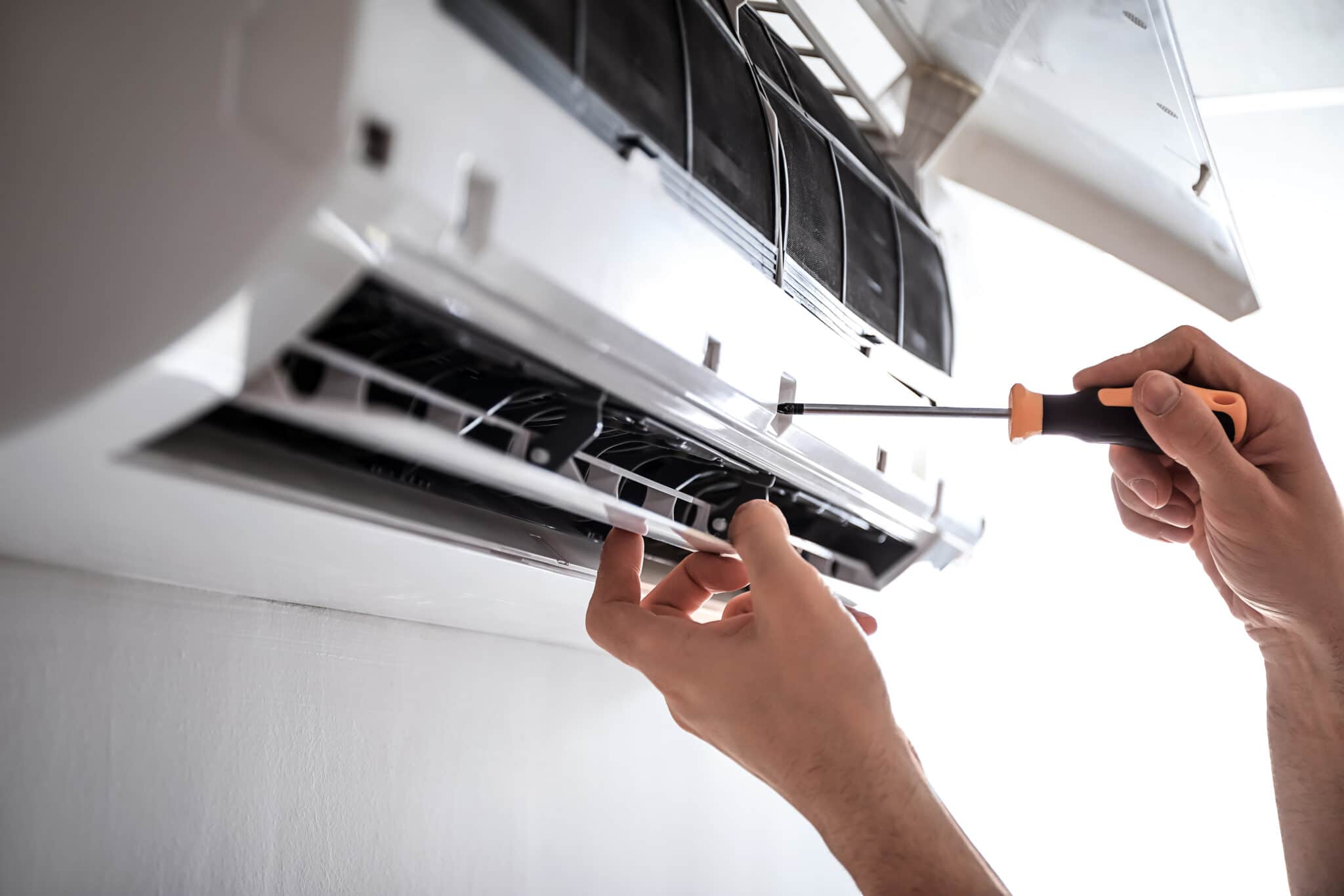

An air conditioner not cooling can become a serious problem during hot weather. The system may run continuously, air may come from the vents, and the thermostat may appear normal, yet the house remains warm.
Some causes are simple. An incorrect thermostat setting, dirty air filter, closed vent, or blocked outdoor unit may reduce cooling. Other problems, including low refrigerant, a frozen evaporator coil, electrical failure, or compressor damage, require professional repair.
This guide explains why an air conditioner is not cooling, what homeowners can safely check, which warning signs require immediate attention, and when repairing or replacing the system makes more sense.
Why Is My Air Conditioner Not Cooling?
A central air conditioner does not create cold air. Instead, it removes heat and moisture from the air inside your home.
The indoor evaporator coil absorbs heat. Refrigerant carries that heat to the outdoor condenser, where it is released outside. Meanwhile, the blower moves conditioned air through the ductwork and into each room.
When airflow, heat transfer, electrical operation, drainage, refrigerant circulation, or equipment sizing is disrupted, the AC may run without cooling properly.
The most common causes include:
- Incorrect thermostat settings
- A dirty air filter
- Closed or blocked vents
- A dirty outdoor condenser
- A clogged condensate drain
- A frozen evaporator coil
- Low refrigerant or a refrigerant leak
- A failed condenser fan
- A bad capacitor
- Electrical or control problems
- Compressor failure
- An undersized or poorly installed system
Air Conditioner Not Cooling: Quick Troubleshooting Checklist
Before calling an HVAC technician, perform these safe checks.
| Check | What to do |
| Thermostat mode | Set it to COOL |
| Temperature | Set it several degrees below the room temperature |
| Fan setting | Select AUTO, not ON |
| Thermostat batteries | Replace weak or dead batteries |
| Air filter | Replace it if it looks dirty |
| Supply vents | Open them and remove obstructions |
| Return grilles | Make sure furniture or curtains are not blocking them |
| Circuit breaker | Check whether the AC breaker has tripped |
| Outdoor unit | Remove leaves, weeds, and debris |
| Outdoor fan | Observe whether it is spinning |
| Ice | Turn off cooling if ice appears |
| Water | Check for water near the indoor unit |
| Unusual sounds | Stop the system if you hear grinding or loud buzzing |
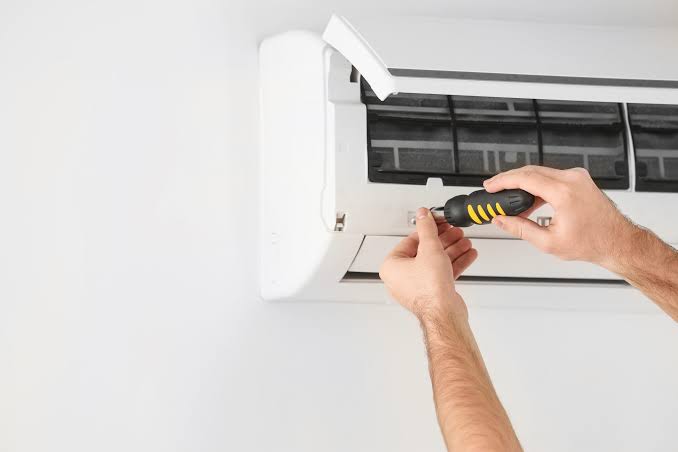
Do not open electrical panels, touch capacitors, handle refrigerant, remove internal components, or repeatedly reset a circuit breaker.
1. The Thermostat Is Set Incorrectly
When an air conditioner is not cooling, begin with the thermostat.
Confirm that the thermostat is set to COOL, not HEAT or FAN. The selected temperature must also be lower than the current indoor temperature.
For example, if the room temperature is 78°F and the thermostat is set to 80°F, the system will not begin a cooling cycle.
Set the fan to AUTO
The thermostat fan setting should normally be set to AUTO.
When the fan is set to ON, the blower runs continuously, even when the outdoor cooling equipment is not operating. This means the vents may circulate room-temperature air between cooling cycles.
That air can feel warm and create the impression that the AC is malfunctioning.
Set the fan to AUTO, lower the temperature, and wait several minutes. Many systems have a built-in delay that prevents the compressor from restarting too quickly.
Check the thermostat batteries
Weak batteries may cause:
- A blank or dim screen
- Incorrect temperature readings
- Delayed system operation
- Lost programming
- Intermittent cooling calls
Replace the batteries if necessary. If the thermostat remains unresponsive, it may need recalibration, rewiring, or replacement.
2. The Air Filter Is Dirty
A clogged filter is one of the most common reasons for an air conditioner not cooling.
The filter collects dust, pollen, hair, pet dander, and other particles. As it becomes clogged, less air can move through the indoor system.
Restricted airflow can cause:
- Weak air from the vents
- Long cooling cycles
- Uneven temperatures
- Higher electricity bills
- Blower strain
- Evaporator coil icing
- Premature equipment wear
Remove the filter and inspect it. If it appears gray, dusty, or covered in debris, replace it with the correct size and type.
Many filters need replacement every one to three months. However, the correct schedule depends on:
- Filter thickness
- Filter material
- System runtime
- Pets
- Indoor smoking
- Construction dust
- Household allergies
- Manufacturer instructions
Do not automatically install the highest-rated filter available. A filter that is too restrictive may reduce airflow if the HVAC system was not designed for it.
3. Supply Vents or Return Grilles Are Blocked
Your AC cannot cool the house properly when conditioned air cannot circulate.
Check every supply register and return grille. Make sure they are not blocked by:
- Furniture
- Curtains
- Rugs
- Boxes
- Clothing
- Dust buildup
- Decorative covers
Open supply vents fully unless an HVAC professional has intentionally adjusted them for system balancing.
Closing multiple vents usually does not save energy. It can increase duct pressure, reduce airflow, worsen leakage, and contribute to evaporator coil freezing.
When only one room is not cooling
If most of the house feels comfortable but one room remains warm, the problem may involve:
- A closed register
- A crushed or disconnected duct
- Poor duct design
- Duct leakage
- Inadequate insulation
- Excessive sunlight
- Large windows
- An airflow-balancing problem
A duct inspection or professional airflow test may be necessary.
4. The Outdoor Condenser Is Dirty or Blocked
The outdoor condenser releases the heat collected from inside your home.
For this process to work, air must flow freely through the condenser coil. Dirt and debris can reduce heat transfer and make the system work harder.
Common obstructions include:
- Grass clippings
- Leaves
- Pollen
- Dust
- Weeds
- Shrubs
- Plastic bags
- Dryer lint
- Stored items
Maintain approximately two feet of clearance around the unit unless the manufacturer recommends a different distance.
Remove loose debris from the top and sides. Trim vegetation without damaging the refrigerant lines or wiring.
Can you clean the condenser yourself?
Some manufacturers allow homeowners to gently rinse the outdoor coil with a garden hose. However, electrical safety is essential.
Before cleaning:
- Set the thermostat to OFF.
- Turn off the outdoor disconnect.
- Switch off the appropriate circuit breaker.
- Avoid electrical compartments and controls.
- Do not remove cabinet panels unless qualified.
- Never use a pressure washer.
- Follow the equipment manual.
A pressure washer can bend the thin coil fins and reduce airflow.
Deep internal cleaning, chemical cleaning, bent-fin repair, and electrical inspection should be left to a professional.
5. The Condensate Drain Is Clogged
Air conditioning removes humidity as well as heat.
Moisture collects on the indoor evaporator coil, drains into a pan, and flows outside through a condensate line.
Dust, algae, mold, mildew, insects, or debris may block this line. As water backs up, a safety float switch may shut down the indoor unit to prevent water damage.
Signs of a clogged condensate drain include:
- Water around the air handler
- A full drain pan
- Water stains
- Musty odors
- Intermittent cooling
- An indoor unit that will not start
- A thermostat that appears normal while no cold air is delivered
Some systems allow basic drain maintenance, but layouts vary. Do not pour harsh chemicals into the drain without confirming that the product is safe for the equipment and piping.
Call an HVAC technician when water is overflowing, the float switch has activated, or the blockage is difficult to access.
6. The Evaporator Coil Is Frozen
A frozen evaporator coil is a common reason for an air conditioner not cooling.
The evaporator coil is usually located inside or near the furnace or air handler. It absorbs heat from the indoor air.
When the coil becomes too cold, moisture freezes on its surface. Ice then blocks airflow and reduces heat transfer, making the cooling problem worse.
Signs of a frozen evaporator coil include:
- Ice on copper tubing
- Frost near the indoor unit
- Weak airflow
- Warm air from the vents
- Water near the unit after thawing
- Long cooling cycles
- Continuous system operation
Possible causes include:
- A clogged air filter
- A dirty evaporator coil
- Low refrigerant
- A refrigerant leak
- A failing blower motor
- Incorrect blower speed
- Closed vents
- Blocked return airflow
- A metering-device problem
- Running the system in unsuitable conditions
What should you do if the coil is frozen?
Turn the cooling mode off.
Do not scrape, chip, or melt the ice with a heat gun or hair dryer. Damaging the coil can create an expensive refrigerant leak.
You may set the fan to ON temporarily to help circulate air while the ice melts, but only if there is no electrical fault, water hazard, or unusual sound. The underlying cause still needs to be diagnosed.
A frozen coil is a symptom, not the original problem.
7. The Refrigerant Level Is Low
Refrigerant absorbs heat indoors and releases it outdoors.
It circulates in a sealed system and changes between liquid and vapor during operation. Refrigerant is not normally consumed like fuel.
Low refrigerant commonly results from:
- A refrigerant leak
- Improper charging during installation
- Incorrect previous service
- A damaged coil
- Loose or damaged connections
Signs of low refrigerant may include:
- Warm or mildly cool vent air
- Long cooling cycles
- Ice on refrigerant lines
- Hissing sounds
- Bubbling sounds
- Reduced cooling during hot afternoons
- Better cooling at night
- Higher energy bills
- A frozen evaporator coil
A system that cools at night but struggles during the hottest part of the day may have a low charge, dirty coils, poor airflow, inadequate capacity, or another performance issue.
Can homeowners add refrigerant?
No. Refrigerant diagnosis and handling require specialized tools, training, and compliance with applicable regulations.
A qualified technician should:
- Measure temperatures and pressures.
- Confirm whether the system is undercharged.
- Look for the source of the leak.
- Determine whether repair is practical.
- Repair the leak when appropriate.
- Recharge the system to manufacturer specifications.
Adding refrigerant without fixing a leak may provide only temporary cooling.
8. The Outdoor Condenser Fan Is Not Running
The outdoor fan moves air across the condenser coil.
If the fan stops working, the system cannot reject heat effectively. The compressor may overheat, cooling may fall sharply, and the system may shut down.
Possible causes include:
- A failed fan motor
- A bad capacitor
- Damaged wiring
- A failed relay
- A control-board problem
- A stuck fan blade
- Electrical overheating
Stand a safe distance from the unit and observe it without opening the cabinet.
Call a professional if:
- The outdoor unit hums but the fan does not spin
- The fan starts and stops
- The blades move slowly
- The motor squeals or grinds
- The cabinet becomes unusually hot
- The compressor runs while the fan remains off
Never reach through the grille or try to push-start the fan.
9. The Capacitor Has Failed
Many AC motors use capacitors to start or continue running.
A failed capacitor may prevent the:
- Compressor from starting
- Condenser fan from running
- Blower motor from operating
- Outdoor unit from starting correctly
Possible symptoms include:
- Clicking
- Humming
- Buzzing
- Delayed startup
- Intermittent operation
- A fan that does not spin
- A system that shuts down unexpectedly
Capacitors can retain a dangerous electrical charge even after power is disconnected.
Do not open the electrical panel or attempt capacitor replacement unless you are licensed and properly trained.
10. There Is an Electrical or Control Problem
An air conditioner depends on several electrical and control components.
A failure may involve:
- Circuit breakers
- Disconnects
- Contactors
- Relays
- Control boards
- Thermostat wiring
- Blower modules
- Safety switches
- Motor windings
- Loose connections
- Burned terminals
Electrical problems may cause:
- No cooling
- Intermittent cooling
- Rapid cycling
- Repeated breaker trips
- Burning odors
- Buzzing
- Clicking
- A blank thermostat
- An outdoor unit that will not start
Should you reset the breaker?
You may perform one reset if the equipment manual permits it.
Move the breaker completely to OFF and then back to ON. If it trips again, leave it off.
Repeatedly resetting a breaker is unsafe because the trip may indicate a short circuit, grounded motor, compressor problem, damaged wire, failed capacitor, or another serious fault.
11. The Compressor Has Failed
The compressor circulates refrigerant through the cooling system.
A major compressor fault can prevent the AC from removing heat, even when the indoor blower continues to run.
Possible warning signs include:
- Warm air from the vents
- Loud humming
- Clicking from the outdoor unit
- Repeated breaker trips
- Hard starting
- Short cycling
- An outdoor fan that runs while the compressor remains off
- Unusually high electricity use
Compressor problems require professional diagnosis. A non-running compressor does not always mean the compressor itself has failed. The actual cause may be a capacitor, contactor, wiring fault, control problem, overload, or low-voltage issue.
Because compressor replacement can be expensive, technicians should confirm the diagnosis before recommending replacement.
12. The Air Conditioner Is Too Small
An undersized AC may run continuously and still fail to reach the thermostat setting during hot weather.
However, long runtime does not automatically mean the equipment is too small. Modern variable-speed and high-efficiency systems may run for long periods by design.
Other problems can imitate undersizing:
- Dirty coils
- Low refrigerant
- Duct leakage
- Poor insulation
- Excessive air leakage
- High indoor humidity
- Incorrect blower settings
- Poor installation
- Blocked airflow
- Extreme outdoor heat
Proper sizing requires a professional load calculation.
A load calculation should consider:
- Climate
- Home size
- Ceiling height
- Insulation
- Window size and type
- Window orientation
- Sun exposure
- Air leakage
- Occupancy
- Duct location
- Duct losses
- Appliances
- Shading
Square footage alone is not enough.
An oversized system can also create problems. It may cool the air too quickly, short-cycle, leave rooms uneven, and fail to remove enough humidity.
Additional Reasons an Air Conditioner Is Not Cooling
Although the previous causes are the most common, other problems may affect cooling.
Leaking or damaged ductwork
Conditioned air may escape into an attic, crawl space, wall cavity, garage, or basement before reaching the rooms.
Signs include:
- Weak airflow
- Uneven temperatures
- High energy bills
- Dust near vents
- Hot or cold spots
- Whistling sounds
- Long cooling cycles
Dirty evaporator coil
Dust and debris on the indoor coil reduce heat transfer. The problem may occur even when the filter looks clean, especially if the system has operated without a filter in the past.
Blower motor problems
A failing blower motor or electronic control module may produce weak or inconsistent airflow.
Faulty temperature sensor
An inaccurate thermostat or sensor may incorrectly measure the room temperature and stop cooling too early.
Closed dampers
Manual or automatic dampers inside the ductwork may be closed, stuck, or incorrectly adjusted.
Poor insulation and air sealing
Even a properly working air conditioner may struggle when heat enters through poorly insulated ceilings, walls, windows, doors, or ductwork.
Extreme outdoor temperatures
During severe heat, indoor temperature may rise slightly above the thermostat setting, especially in older or poorly insulated homes.
A small difference during unusually hot weather does not always indicate equipment failure. However, a large or sudden decline in performance should be investigated.
What If the Air Conditioner Is Blowing Air but It Is Not Cold?
Strong airflow with warm air often points to a problem outside the basic airflow system.
Possible causes include:
- Thermostat set incorrectly
- Outdoor unit not running
- Compressor not starting
- Low refrigerant
- Refrigerant leak
- Dirty condenser coil
- Failed condenser fan
- Heat pump reversing-valve problem
- Electrical failure
Check the thermostat and observe the outdoor unit from a safe distance. If the outdoor unit is silent, clicking, humming, or running without its fan, call a professional.
What If the Airflow Is Weak?
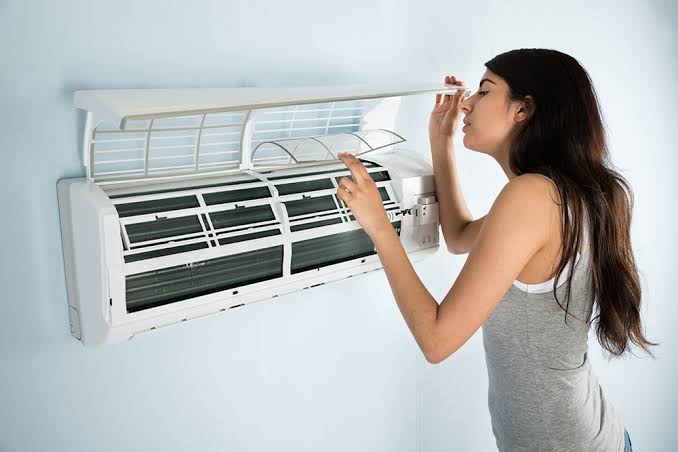
Weak airflow may point to:
- A clogged filter
- A frozen evaporator coil
- A blocked return grille
- Closed supply vents
- A dirty blower wheel
- A failing blower motor
- Damaged ductwork
- Incorrect blower settings
If every vent has weak airflow, the problem is likely near the indoor unit or main duct system.
If only one or two rooms are affected, inspect the individual vents and branch ducts.
What If the AC Cools Upstairs but Not Downstairs?
Uneven cooling may result from:
- Duct imbalance
- Closed dampers
- Poor insulation
- Air leakage
- Thermostat location
- Solar heat gain
- Inadequate return airflow
- A single-zone system serving multiple floors
In many homes, upper floors become warmer because heat rises and the roof receives direct sunlight. However, severe differences may indicate a design or airflow issue.
What If the AC Cools at Night but Not During the Day?
An AC that performs better at night may be reaching its limit during peak daytime heat.
Possible causes include:
- Dirty condenser coils
- Low refrigerant
- Restricted airflow
- Duct leakage
- Poor insulation
- Excessive window heat gain
- Inadequate system sizing
- Compressor wear
- High indoor humidity
A professional should measure system temperatures, airflow, refrigerant performance, and the home’s cooling load.
Should You Turn Off an AC That Is Not Cooling?
Turn the system off when:
- Ice is present
- The breaker keeps tripping
- You smell burning
- Water is overflowing
- The outdoor fan is not running
- You hear grinding or loud buzzing
- The compressor starts and stops repeatedly
- The system appears to be overheating
Continuing to run a damaged system may increase repair costs.
When to Call an HVAC Technician
Call a licensed HVAC professional when:
- Basic thermostat and filter checks do not help
- Ice appears on the coil or refrigerant lines
- Refrigerant may be leaking
- The outdoor fan does not run
- The breaker trips repeatedly
- Water is leaking from the indoor unit
- Airflow remains weak
- The compressor does not start
- The thermostat loses power
- The system makes unusual noises
- Cooling performance suddenly declines
- The system is still under warranty
Tell the technician which checks you already completed. This may help speed up the diagnostic process.
Air Conditioner Repair or Replacement?
An air conditioner not cooling does not automatically need replacement.
Many problems can be repaired, including:
- Thermostat faults
- Clogged drains
- Dirty coils
- Failed capacitors
- Fan motors
- Contactors
- Damaged wiring
- Repairable refrigerant leaks
Replacement may deserve consideration when:
- The system is more than 10 to 15 years old
- Repair costs are high
- The compressor has failed
- Refrigerant is expensive or difficult to obtain
- Repairs are becoming frequent
- Energy bills remain unusually high
- The system cannot control humidity
- Major components are mismatched
- The unit was incorrectly sized
- The heat exchanger or other major components are also deteriorating
Do not replace equipment based on age alone. Consider:
- Warranty coverage
- Repair history
- System condition
- Installation quality
- Energy efficiency
- Comfort
- Refrigerant type
- Expected ownership period
- The cost of a properly installed replacement
Ask for a written diagnosis and itemized estimate before deciding.
How to Prevent an Air Conditioner From Not Cooling
Routine maintenance can prevent many cooling problems.
Replace the filter
Inspect the filter regularly and replace it when dirty.
Keep vents open
Avoid blocking supply registers and return grilles.
Clear the outdoor unit
Remove weeds, leaves, grass, and stored items from around the condenser.
Watch the drain
Look for water, algae buildup, or slow drainage near the condensate system.
Schedule annual maintenance
Professional maintenance may include:
- Coil inspection
- Drain cleaning
- Electrical testing
- Capacitor testing
- Refrigerant performance checks
- Blower inspection
- Airflow measurement
- Thermostat testing
- Temperature-split testing
- Safety-control inspection
Pay attention to changes
Do not ignore:
- New noises
- Longer run times
- Weak airflow
- Higher energy bills
- Water leaks
- Uneven cooling
- Frequent cycling
Early diagnosis may prevent a small problem from becoming a major repair.
Frequently Asked Questions About an Air Conditioner Not Cooling
The thermostat may be set incorrectly, the air filter may be clogged, or the outdoor condenser may be blocked. Other possible causes include low refrigerant, a frozen evaporator coil, a failed fan, duct leakage, or compressor trouble.
Check whether the thermostat is set to COOL and the fan is set to AUTO. Warm air may also indicate that the outdoor unit is not running, the compressor has failed, the refrigerant level is low, or the evaporator coil is frozen.
Yes. A clogged filter restricts airflow and may reduce cooling, increase energy use, and contribute to a frozen evaporator coil.
Turn it off if you see ice, smell burning, hear grinding, notice overflowing water, or experience repeated breaker trips. Continuing to run the system may cause additional damage.
Wait at least several minutes. Many systems have a built-in compressor delay that prevents immediate restarting.
You may remove loose debris and gently rinse the coil if the manufacturer allows it. Disconnect electrical power first, avoid electrical components, and never use a pressure washer.
A leak is a common cause, but the system may also have been incorrectly charged during installation or previous service.
The system may have dirty coils, low refrigerant, poor airflow, duct leakage, inadequate insulation, excessive solar heat gain, or insufficient cooling capacity.
Weak airflow may result from a dirty filter, frozen coil, blocked return grille, blower problem, closed vent, or damaged ductwork.
Possible causes include a clogged condensate drain, full drain pan, damaged drain pan, disconnected drain line, or melting ice from a frozen evaporator coil.
You may reset it once when the equipment manual permits it. If the breaker trips again, leave it off and call a professional.
Many filters require replacement every one to three months. Follow the filter and equipment manufacturer’s instructions because filter life varies by type, household conditions, and system use.
A commonly cited lifespan is approximately 10 to 15 years. However, maintenance, climate, installation quality, usage, equipment design, and repair history can significantly affect service life.
Long cycles may be normal during extreme heat, especially with variable-speed equipment. However, the system should still maintain a reasonable indoor temperature. Continuous operation combined with poor cooling may indicate a problem.
Repair may make sense for a newer system with a minor fault. Replacement may be more practical for an older unit with frequent failures, major compressor damage, high energy use, or expensive refrigerant-related repairs.
Final Thoughts
When an air conditioner is not cooling, begin with the safest checks.
Confirm that the thermostat is set to COOL, select AUTO for the fan, lower the temperature, inspect the filter, open the vents, and clear debris around the outdoor unit.
If the problem continues, the system may have a frozen coil, clogged drain, refrigerant problem, failed fan, electrical fault, damaged capacitor, compressor issue, leaking ductwork, or sizing problem.
Do not handle refrigerant, open electrical compartments, touch capacitors, scrape ice from a coil, or repeatedly reset a breaker. A qualified HVAC technician can identify the cause and recommend the safest repair.