


Introduction
Bathroom window curtains can turn an exposed, unfinished window into a private and stylish feature. The right curtains soften hard bathroom surfaces, control sunlight, and help the room feel more comfortable. This guide explains how to choose, measure, hang, clean, and style curtains for almost every bathroom window.
What Are Bathroom Window Curtains?
Bathroom window curtains are fabric window coverings designed to provide privacy, control light, and improve the room’s appearance. Unlike curtains used in a dry bedroom or living room, bathroom curtains must cope with moisture, steam, and frequent temperature changes.
They may cover the entire window or only its lower half. Common designs include café curtains, tier curtains, valances, short panels, waterproof curtains, and fabric Roman shades.
The best bathroom window curtains balance three needs: privacy, natural light, and moisture resistance. They should also fit the window without touching wet surfaces, sinks, tubs, or shower walls.
Why Use Curtains on a Bathroom Window?
A bathroom window can make the room brighter and more inviting, but it can also create a privacy problem. Curtains provide a flexible way to cover the glass without permanently changing the window.
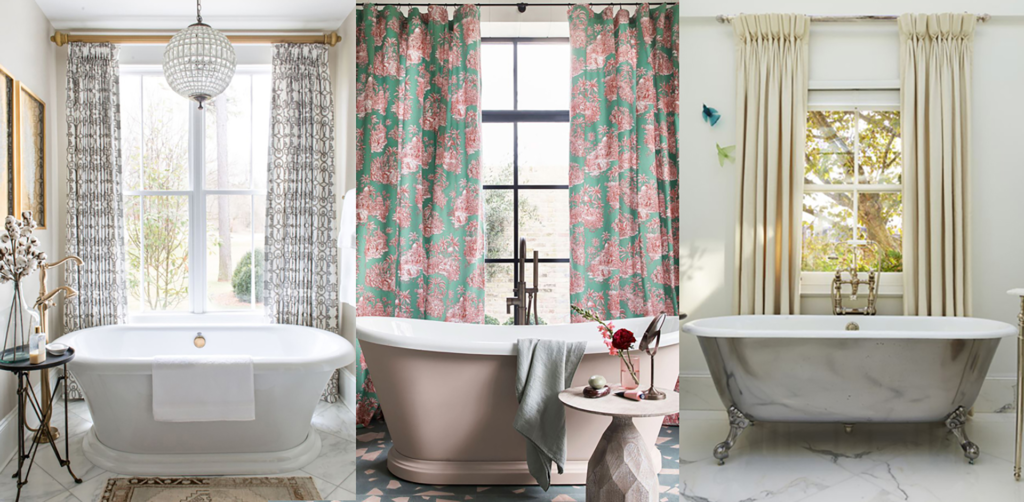
Unlike some fixed bathroom window coverings, curtains can be opened, closed, removed, or replaced within minutes. They also add softness to a room filled with tile, mirrors, metal, and porcelain.
Curtains for bathroom windows are especially useful when the window faces a neighbor, sidewalk, garden, or shared outdoor area. They allow the bathroom to receive daylight while making the space feel secure and complete.
Benefits of Bathroom Window Curtains
Bathroom curtains do more than hide the view. They improve comfort, support the room’s design, and offer an affordable decorating solution. Because curtains come in many sizes and materials, they can work with nearly any window, budget, or bathroom style.
- Improved Privacy
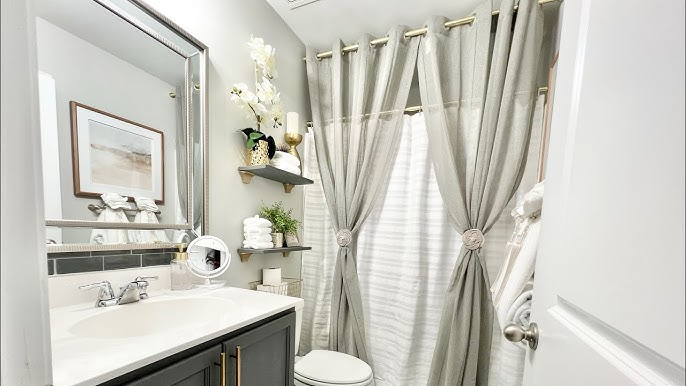
Bathroom privacy curtains create a physical barrier between the room and the outside view. They are especially valuable at night, when interior lights can make standard or lightly frosted glass easier to see through from outdoors.
- Better Light Control
Curtains let you adjust how much daylight enters the bathroom. Sheer panels soften bright sun, while lined or layered curtains block stronger light. Adjustable panels provide more control than permanently frosted glass alone.
- Added Color and Style
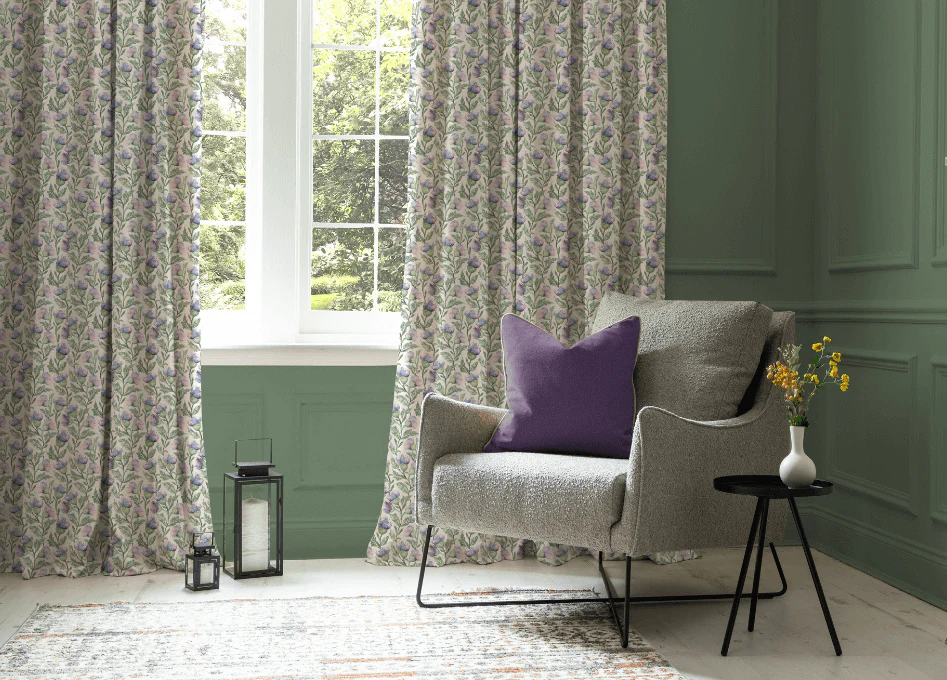
Curtains introduce color, pattern, texture, and movement. A simple floral print can warm a plain white bathroom, while crisp neutral fabric can make an older bathroom look cleaner and more modern.
- Affordable and Easy Updates
Replacing tile, fixtures, or flooring can be costly. Replacing a curtain is simple and inexpensive. Affordable bathroom window curtains can refresh the room without tools, construction work, or a large decorating budget.
What to Consider Before Choosing Curtains?
Learning how to choose bathroom window curtains starts with the room itself. Study the window, moisture level, sunlight, privacy needs, and nearby surfaces. A curtain that looks beautiful in a product photo may not work well beside a wet shower or busy sink.
- Privacy Level
Consider what can be seen through the window during both daytime and nighttime. A sheer panel may provide privacy during the day but become almost transparent when the bathroom light is on after dark.
- Natural Light
Decide how much daylight you want to keep. Dark, thick curtains can make a small bathroom feel closed in. Café curtains, sheer panels, or top-down window treatments preserve more light while reducing direct views.
- Moisture and Ventilation
Bathrooms with strong exhaust fans and good airflow can support more fabric choices. In a poorly ventilated room, choose quick-drying synthetic material and avoid thick fabric that holds moisture for long periods.
- Window Size and Location
Measure the window and note its position. Curtains above a toilet face different conditions than curtains inside a shower. Look for nearby faucets, tubs, doors, shelves, towel bars, and heat sources.
- Existing Bathroom Style
Choose curtains that support the room’s existing colors and features. A ruffled farmhouse curtain may clash with a sharp modern vanity, while a plain gray panel may feel too cold in a colorful cottage bathroom.
- Budget and Maintenance
Consider the purchase price, hardware, cleaning needs, and expected lifespan. Cheap bathroom window curtains may provide good value when they are washable, properly sized, and suitable for the room’s moisture level.
Best Curtain Materials for Bathrooms
Bathroom curtains need fabric that can survive steam and repeated cleaning. The best material depends on the window location. A curtain beside a dry vanity has more flexibility than one placed a few inches from a showerhead.
- Polyester
Polyester is one of the most practical choices for bathroom window curtains. It resists wrinkles, dries quickly, and usually costs less than natural fabric. Many polyester curtains can also be machine-washed.
- Cotton Blends
Cotton blends combine the soft appearance of cotton with the durability of synthetic fibers. They feel more natural than pure polyester but often dry faster and shrink less than curtains made from 100 percent cotton.
- Linen Blends
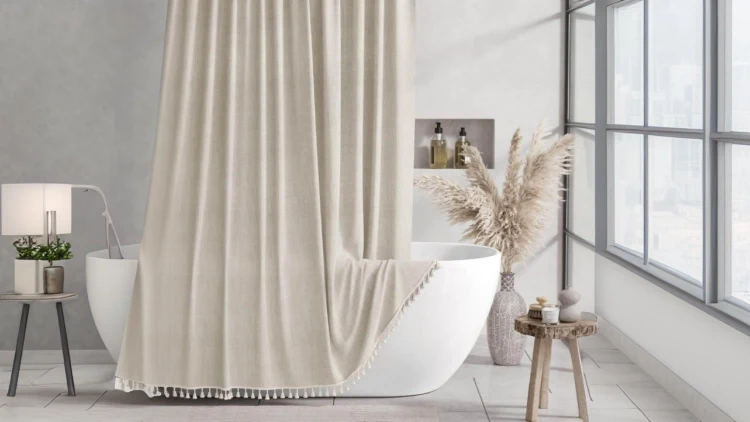
Linen-blend curtains provide a relaxed, textured look. Blended versions resist wrinkles and moisture better than pure linen. They work well in coastal, farmhouse, boho, and spa-style bathrooms with reliable ventilation.
- Vinyl and Water-Resistant Fabrics
Vinyl and coated fabrics are useful near wet zones because water sits on the surface instead of soaking deeply into the material. Waterproof bathroom window curtains are especially helpful beside tubs and showers.
Moisture-resistant materials can also make other surfaces easier to maintain. For example, practical waterproof flooring can create an easy-care foundation that works well with washable curtains and other bathroom finishes.
- Sheer Fabrics
Sheer fabrics soften sunlight and make a bathroom feel open. However, they rarely provide complete nighttime privacy by themselves. Combine sheers with blinds, privacy film, or a second curtain layer when needed.
- Materials to Avoid
Avoid heavy velvet, untreated silk, thick wool, and fabrics that require dry cleaning. These materials can absorb moisture, develop odors, and become difficult to maintain. Pure, unlined natural fabric may also shrink after washing.
Types of Bathroom Window Curtains
The shape of the curtain affects privacy, light, and style. Some designs cover the entire window, while others leave the top open. Choose a type that fits both the window and the way the bathroom is used.
- Café Curtains
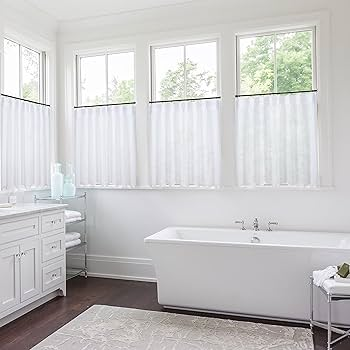
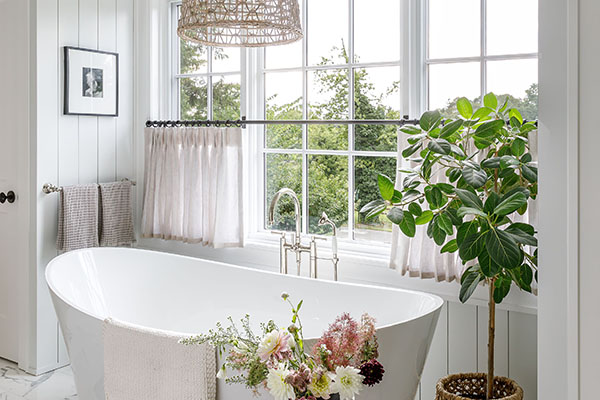
Bathroom café curtains cover the lower portion of a window while leaving the upper glass open. They provide privacy at body level and allow daylight to enter from above, making them ideal for street-facing windows.
- Tier Curtains
Bathroom tier curtains usually come as two short panels. They are easy to open and create a classic, balanced appearance. Short tier curtains for bathroom windows work especially well over toilets, sinks, and small tubs.
- Valances
A bathroom window valance covers only the top part of the window. It adds color and hides the curtain rod but provides little privacy. Valances work best with blinds, shades, shutters, or privacy film.
- Full-Length Curtains
Full-length curtains create a dramatic, finished appearance on large bathroom windows. They should stop above the floor in damp rooms. Avoid allowing the hem to collect water, dust, hair, or cleaning products.
- Roman Shade Curtains
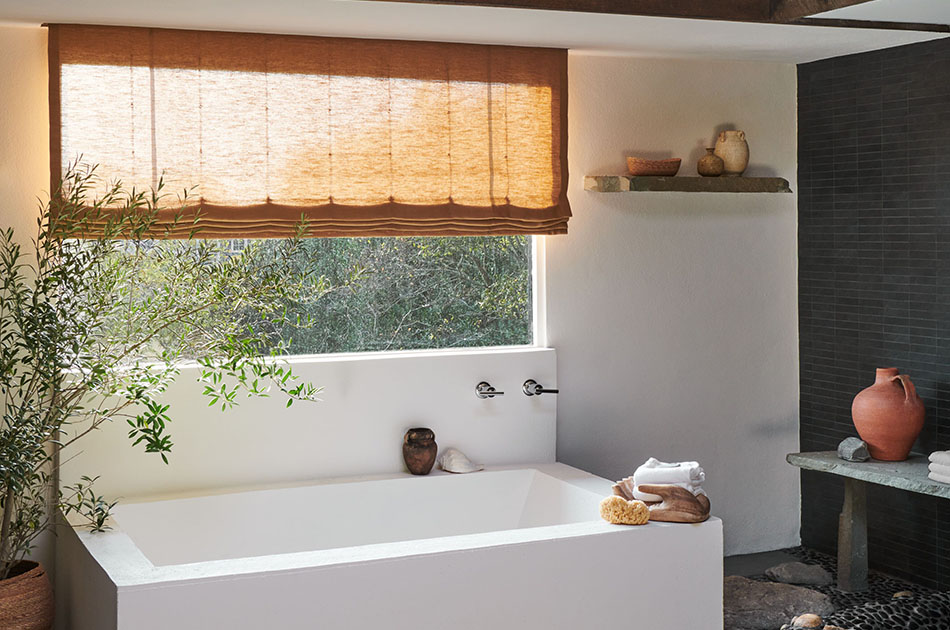
Fabric Roman shades fold upward into neat horizontal sections. They offer a tailored look and allow adjustable privacy. Choose washable or moisture-resistant fabric, especially when the shade sits near a tub or sink.
- Waterproof Curtains
Waterproof curtains use vinyl, coated polyester, or similar material. They suit windows close to direct splashes. While practical, they should still be opened and dried regularly to prevent trapped moisture around the frame.
- Curtain and Blind Combinations
Layering curtains with blinds creates flexible light and privacy control. The blind provides coverage, while the curtain adds softness and style. This combination works especially well for bedrooms and bathrooms facing nearby homes.
Bathroom Curtain Ideas by Window Type
The best bathroom window curtain ideas respond to the window’s size, position, and exposure to water. Instead of choosing a curtain based only on appearance, consider how the window behaves throughout the day.
- Small Windows
Curtains for small bathroom windows should look light and correctly scaled. Try café panels, short tiers, or one simple Roman shade. Large prints and heavy folds may overpower a narrow or low window.
Small bathroom window curtains usually look best when they fit close to the frame. A slim tension rod can keep the installation neat without adding bulky hardware to an already compact wall.
- Large Windows
Large windows can support wider panels, layered treatments, and stronger patterns. Use enough fabric to create gentle fullness. Curtains that barely cover the glass can look flat and undersized when closed.
- Windows Above the Bathtub
Choose a short, washable curtain that remains safely above the tub. A café curtain, water-resistant Roman shade, or privacy film and valance combination can provide coverage without hanging into the bathing area.
When planning a wider bathtub remodel, consider the curtain rod, tub height, window trim, ventilation, and splash zone together. Treat them as connected parts rather than separate decisions.
- Windows Inside the Shower
A window inside a shower needs materials made for direct moisture. Use waterproof curtains, vinyl panels, or coated polyester. Install rust-resistant hardware and keep the fabric short enough to avoid standing water.
Windows near walk-in showers need careful placement because open shower layouts can spread water farther than expected. Combine moisture-safe curtains with proper sealing, drainage, and ventilation.
- Frosted Windows
Frosted glass offers daytime privacy but may still reveal shapes at night. A sheer curtain, café panel, or valance adds softness. For greater security, pair the frosted window with a light-filtering blind.
- Awkward or Unusual Windows
For arched, corner, narrow, or off-center windows, use adjustable rods, custom fabric panels, or inside-mounted shades. A simple design often works better than trying to force standard curtains onto an unusual shape.
Bathroom Curtain Ideas by Design Style
Curtains can guide the entire feeling of the room. They may blend quietly into the background or act as a small focal point. Use them to connect the window with the vanity, flooring, tile, and accessories.
For more help creating a coordinated room, explore practical bathroom décor ideas before choosing a final fabric, color, or curtain pattern.
- Modern
Modern bathroom curtains often feature clean lines, solid colors, and limited decoration. Choose crisp white, gray, charcoal, beige, or muted green. Simple grommets or a hidden rod pocket maintain the streamlined look.
- Farmhouse
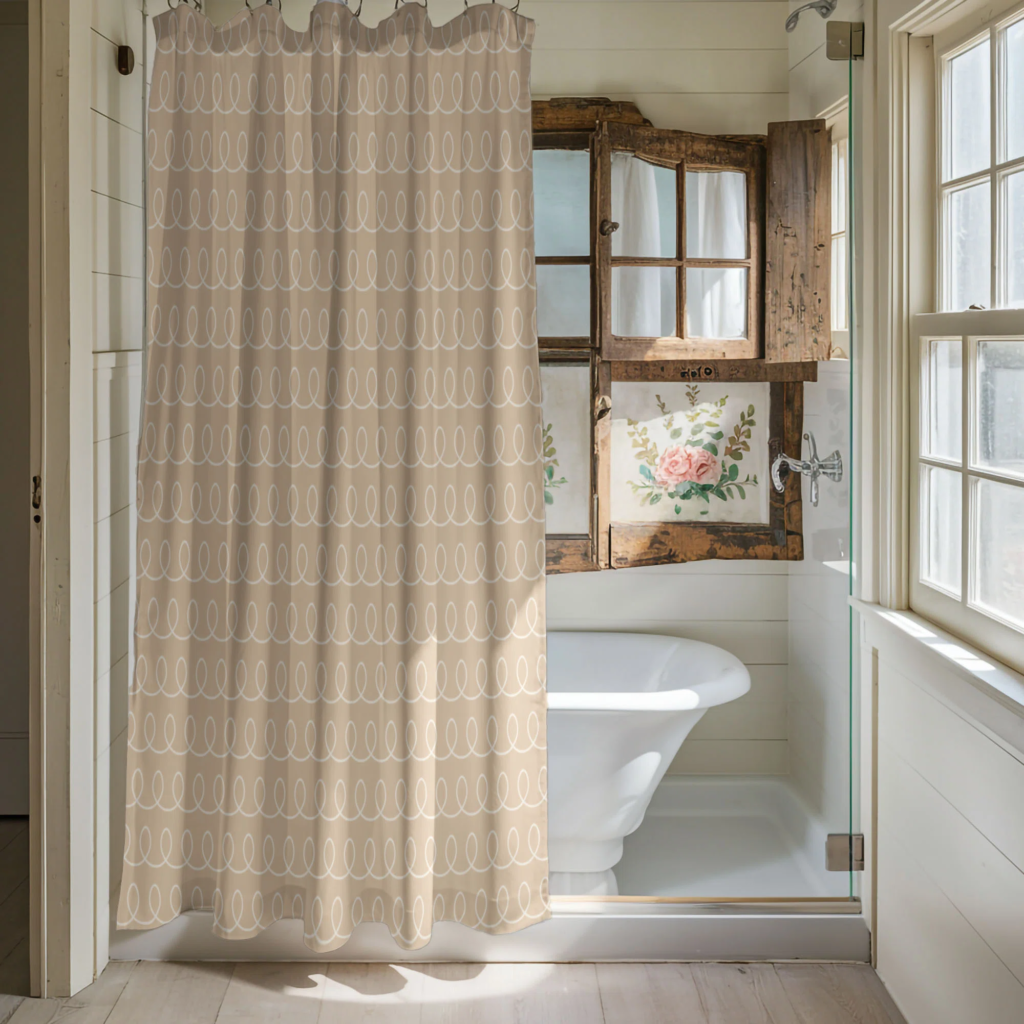
Farmhouse bathroom window curtains feel warm and relaxed. Look for checks, narrow stripes, soft florals, grain-sack patterns, or textured white fabric. Café and tier curtains are especially well suited to farmhouse rooms.
Modern farmhouse bathroom curtains combine rustic texture with cleaner shapes. Try an oatmeal linen blend, black rod, and simple stitched edge rather than heavy ruffles or overly detailed trim.
- Coastal
Coastal curtains use light colors, airy fabric, and relaxed texture. Soft blue, sand, white, sea-glass green, and narrow stripes work well. Avoid filling the room with too many obvious shell or anchor patterns.
- Boho
Boho bathroom curtains can include block prints, warm earth tones, tassels, or loose woven texture. Keep the fabric washable and avoid long fringe near a sink, tub, or damp floor.
- Minimalist
A minimalist curtain should solve the privacy problem without demanding attention. Choose one solid color, hidden hardware, and a simple shape. White, warm gray, stone, or pale beige can support a calm space.
- Traditional
Traditional bathroom valance curtains may feature soft pleats, floral prints, stripes, or decorative edging. Pair them with a blind or full curtain panel for better privacy. Choose restrained details to prevent the room from looking dated.
- Luxury Spa
For a spa-like bathroom, choose light-filtering linen blends, soft neutral colors, and smooth hardware. Cream, warm white, taupe, or eucalyptus green can create a calm mood without making the room feel cold.
How to Choose the Right Color and Pattern?
Curtain color can change how large, bright, or calm a bathroom feels. Before buying, compare fabric samples with the room during daylight and under artificial light. Colors may look very different once the sun goes down.
- Match the Bathroom Color Scheme
Choose a color already present in the room, such as a shade from the tile, vanity, rug, or artwork. Repeating one color creates unity and makes the curtain feel intentional.
- Use Light Colors in Small Bathrooms
White, ivory, pale gray, and soft pastel curtains reflect light and help a compact space feel more open. This approach works especially well when curtain colors also coordinate with bright tile and other small bathroom ideas.
- Add Interest with Patterns
Patterns can wake up a plain bathroom. Try thin stripes, small florals, soft geometric shapes, or botanical prints. Smaller patterns generally suit compact windows, while larger prints need more room to breathe.
- Coordinate with Towels and Shower Curtains
The window curtain and shower curtain do not need to match exactly. Instead, repeat a shared color, texture, or pattern size. This creates coordination without making the bathroom look like a packaged set.
- Avoid Making the Room Feel Busy
If the floor, tile, wallpaper, or shower curtain already has a strong pattern, choose a simple window curtain. Think of pattern as seasoning: a small amount adds interest, but too much can overwhelm the room.
How to Measure a Bathroom Window for Curtains?
Correct measurements prevent gaps, dragging hems, and undersized panels. Measure before ordering, even when the window appears to be a standard size. Frames and trim often vary by several inches.

- Gather the Measuring Tools
Use a metal measuring tape, pencil, paper, and level. A flexible sewing tape may bend and produce less accurate results. Record every measurement immediately instead of relying on memory.
- Measure the Window Width
Measure from one side of the frame to the other. For an outside-mounted rod, add several inches on both sides. Extra width allows the curtain to cover the edges and reduces privacy gaps.
- Measure the Curtain Length
Measure from the planned rod position to the desired bottom edge. Café curtains usually stop near the sill, while tiers may reach slightly below it. Keep all fabric above wet surfaces.
- Decide on Inside or Outside Mounting
Inside-mounted rods sit within the window frame and create a compact look. Outside-mounted rods attach to the wall or trim, making the window appear larger and providing better edge coverage.
- Calculate Curtain Fullness
Curtain fullness refers to the extra fabric that creates folds. For a soft gathered look, use a total curtain width about 1.5 to 2 times the rod width. Thin fabric may need greater fullness.
- Check the Measurements
Measure twice before purchasing or cutting fabric. Check the width at the top, middle, and bottom because older window frames may not be perfectly square. Use the smallest width for an inside-mounted rod.
How to Hang Bathroom Window Curtains?
A secure installation keeps curtains straight and easy to use. Bathroom humidity can weaken poor-quality adhesive and damage untreated hardware, so choose mounting products designed for the surface and environment.
- Choose the Curtain Rod
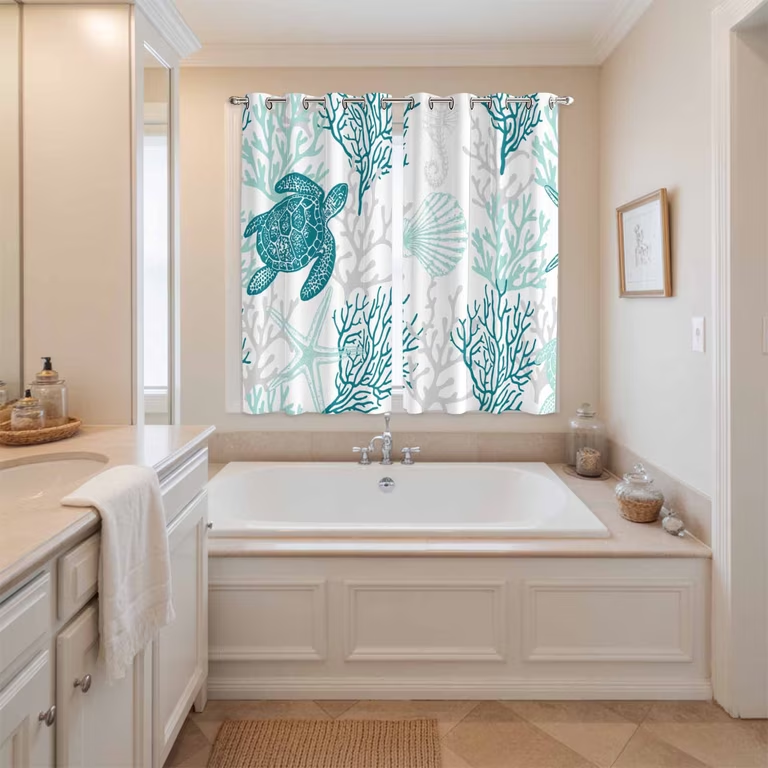
Select a rod that supports the curtain’s weight. Use rust-resistant metal, coated steel, plastic, or another moisture-safe material. Thin tension rods work well for lightweight café and tier curtains.
- Select the Mounting Position
Position the rod where it provides full coverage without blocking window handles or vents. Mounting slightly above the frame can make the window look taller, but avoid placing fabric against the ceiling exhaust area.
- Mark the Bracket Locations
Use a level to mark both bracket positions. Uneven brackets make the curtain hang crooked. Check for pipes or electrical wiring before drilling into a bathroom wall, especially near fixtures.
- Install the Brackets
Use wall anchors when brackets do not align with wall studs. Select anchors that suit tile, drywall, plaster, or wood trim. Do not use standard drill bits on tile without proper tools.
- Hang and Adjust the Curtains
Slide the curtain onto the rod or attach rings and clips. Spread the fabric evenly, check the bottom edge, and open and close the panels several times to confirm smooth movement.
- Use No-Drill Options for Rentals
Tension rods, magnetic rods, adhesive hooks, and removable curtain systems can work well for renters. Follow the weight limit and surface instructions. Steam may weaken products not rated for humid conditions.
- Check Privacy and Light Control
After hanging the curtains, test them during the day and after dark. Turn on the bathroom light and view the window from outside when possible. Adjust gaps, layers, or fabric thickness as needed.
Privacy Ideas for Bathroom Windows
Learning how to make a bathroom window private does not always mean covering every inch with thick fabric. The most effective bathroom window privacy ideas often combine two light or adjustable treatments.
- Layer Curtains with Blinds
Blinds handle privacy and light control, while curtains add color and softness. Use moisture-resistant faux wood, aluminum, or vinyl blinds instead of untreated real wood in humid bathrooms.
- Add Privacy Film
Privacy film sticks to the glass and blurs the view. It works well behind a café curtain or valance. Static-cling film can often be removed without permanent changes, making it suitable for renters.
- Use Top-Down Shades
Top-down shades lower from the top while keeping the bottom portion covered. They allow daylight to enter above eye level and provide adjustable privacy for windows facing streets or neighboring buildings.
- Choose Light-Filtering Curtains
Light-filtering curtains soften the outside view without making the room dark. Choose tightly woven fabric for better coverage. Test the material at night because artificial light can reduce its privacy performance.
- Cover Only the Lower Half
Cafe curtains for bathroom windows protect the area most likely to reveal a person while preserving open sky views above. They are a strong choice for windows placed at standing height.
Budget-Friendly Bathroom Curtain Ideas
An attractive window treatment does not need to cost much. Simple hardware, ready-made fabric, and small DIY changes can produce a custom look. Spend first on proper size and useful material rather than decorative extras.
- Repurpose Fabric or Table Linens
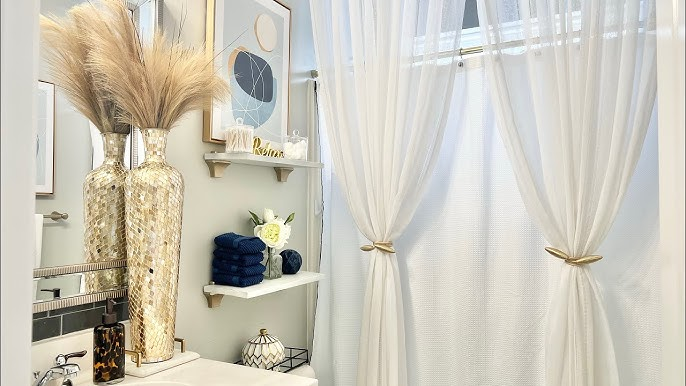
Tea towels, lightweight tablecloths, and fabric napkins can become curtains for a small window. Choose washable material in good condition. Avoid vintage fabric that is fragile, stained, or difficult to clean.
- Use Tension Rods
A tension rod installs without drilling and can cost less than a bracketed rod. It is ideal for lightweight panels inside a recessed frame. Check it regularly because moisture can reduce grip.
- Shop Ready-Made Curtain Sets
Ready-made kitchen tiers often work as affordable bathroom window curtains. Compare the dimensions carefully and select washable fabric. Sets may include matching valances, although using every piece is not always necessary.
- Update Curtains with Trim
Add washable ribbon, bias tape, pom-pom edging, or a contrasting fabric band to plain curtains. Keep decorative trim away from direct spray and make sure it will not bleed color during washing.
- Make Simple No-Sew Curtains
Fabric adhesive tape can create hems and rod pockets without a sewing machine. Choose washable, heat-activated tape and follow its care instructions. Clip rings offer an even faster no-sew hanging method.
How to Make DIY Bathroom Window Curtains?
DIY curtains allow precise sizing and offer more fabric choices than ready-made panels. The project is beginner-friendly when the design uses straight cuts, simple hems, and lightweight material.
- Choose a Moisture-Friendly Fabric
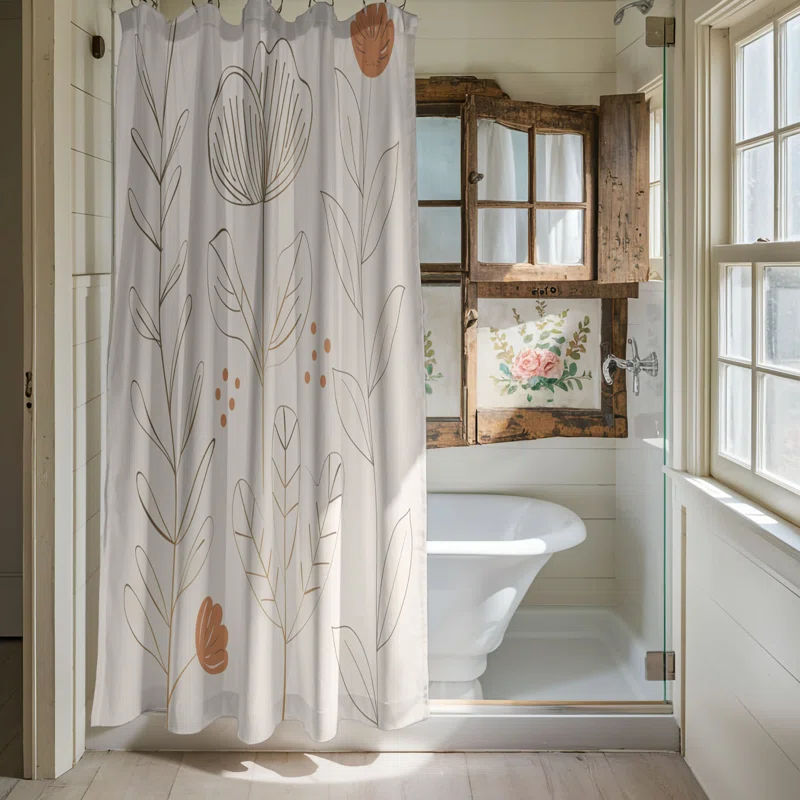
Select polyester, a cotton-polyester blend, or a lightweight linen blend. Wash and dry the fabric before cutting so any shrinkage happens before the curtain is assembled.
- Measure and Cut the Fabric
Use the window measurements to calculate the finished width and length. Add extra fabric for side hems, the top attachment, and the bottom hem. Mark straight lines with fabric chalk.
- Hem the Edges
Fold each raw side edge inward, press it flat, and fold it again. Sew or fuse the hem. Repeat along the bottom with a slightly deeper fold to help the curtain hang neatly.
- Create the Rod Pocket
Fold the top edge over far enough to fit the rod, adding a little space for easy movement. Sew or fuse the bottom of the fold while keeping both ends open.
- Add Rings, Clips, or Tabs
Curtain clips eliminate the need for a rod pocket and make washing easy. Fabric tabs create a relaxed look, while small rings allow panels to slide more smoothly across the rod.
- Hang and Adjust the Curtain
Hang the finished panel and inspect its length. Check that the curtain clears the sill and nearby wet surfaces. Adjust clips or hems before adding decorative details.
- Add Decorative Details
Finish the DIY curtain with a contrasting band, simple trim, or small tiebacks. Use restraint in humid areas. Thick rope, wood beads, and absorbent tassels can trap moisture.
How to Prevent Mold and Mildew?
Mold and mildew grow where moisture lingers. Curtains are vulnerable when they stay wet, touch damp glass, or hang in a room without enough airflow. Prevention is easier than removing a deep mold stain.
- Improve Bathroom Ventilation
Run the exhaust fan during bathing and for a period afterward. Open the bathroom door or window when appropriate. Repair weak fans and clear dust from covers to improve airflow.
- Keep Curtains Away from Wet Surfaces
Shorten curtains that touch the tub, sink, floor, or shower wall. Leave a small gap between the curtain and glass when possible so air can circulate around the fabric.
- Choose Quick-Drying Materials
Polyester and coated fabrics usually dry faster than thick natural materials. Lightweight curtains also release moisture more easily. Avoid dense layers in a bathroom that stays humid for long periods.
- Wash Curtains Regularly
Routine washing removes soap residue, dust, skin oils, and early mildew spores. Add curtain cleaning to the bathroom schedule rather than waiting until visible stains or odors appear.
- Treat Early Signs of Mildew
Act when you first notice small spots or a musty smell. Follow the care label and test any cleaning solution in a hidden area. Delayed treatment can allow stains to spread deeper into the fibers.
How to Clean Bathroom Window Curtains?
Regular cleaning keeps curtains fresh and allows you to inspect the window for condensation or mold. The correct cleaning method depends on the fiber, lining, trim, and waterproof coating.
- Read the Care Label
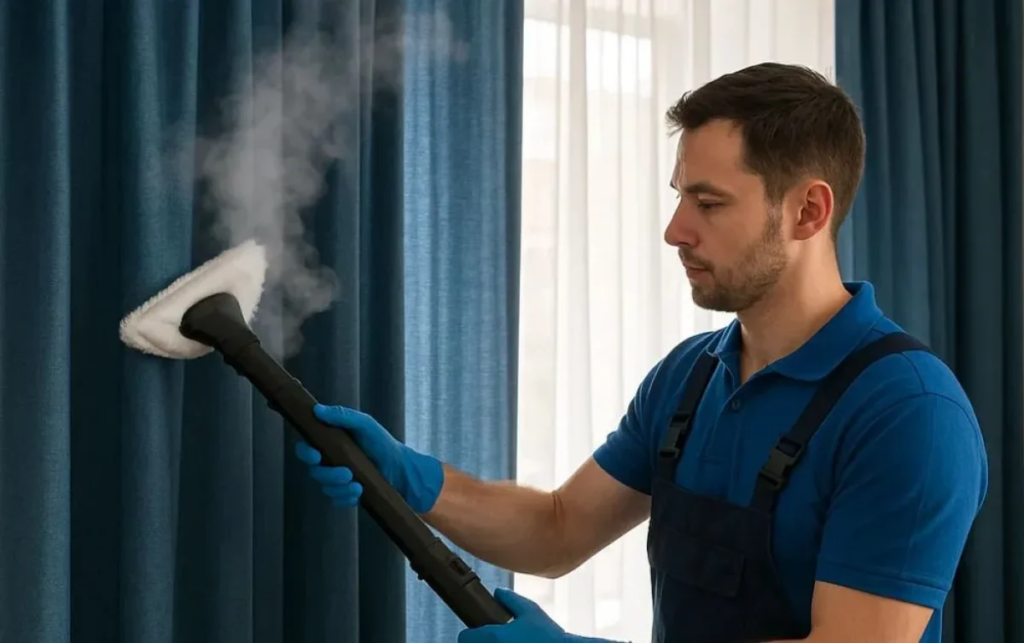
Check the manufacturer’s instructions before washing. The label may recommend cold water, a gentle cycle, hand washing, or air drying. Ignoring it can cause shrinking, fading, or damage to coatings.
- Machine-Wash Suitable Fabrics
Wash machine-safe curtains with mild detergent on a gentle cycle. Avoid overcrowding the machine. Remove rings and hooks first unless the manufacturer clearly says they are safe to wash.
- Hand-Wash Delicate Curtains
Fill a clean basin with cool or lukewarm water and a small amount of mild detergent. Move the fabric gently through the water without twisting it. Rinse until the water runs clear.
- Remove Mold and Stains
Use a fabric-safe stain treatment that matches the care instructions. Never mix household cleaning chemicals. Bleach can discolor fabric, damage coatings, and create dangerous fumes when combined with other products.
- Dry and Rehang Correctly
Air-dry curtains whenever the care label recommends it. Rehang lightweight panels while slightly damp to reduce wrinkles, but make sure ventilation is strong enough for them to dry completely.
Common Curtain Mistakes to Avoid
Even attractive curtains can fail when they are too long, too heavy, or too transparent. Avoiding a few common mistakes will improve privacy and extend the curtain’s useful life.
- Choosing the Wrong Fabric
A fabric chosen only for beauty may absorb water, shrink, or require expensive cleaning. Match the material to the room’s humidity and the window’s distance from direct spray.
- Blocking Too Much Natural Light
Thick, dark curtains can make a compact bathroom feel gloomy. Use café curtains, light colors, or layered treatments when privacy is needed but daylight remains important.
- Using Curtains That Are Too Long
Long curtains can touch the floor, collect dust, or absorb splash water. Bathroom curtains should usually stop at the sill, below the trim, or safely above surrounding fixtures.
- Ignoring Privacy at Night
A curtain that appears private in daylight may reveal shadows after dark. Test it with the interior lights on. Add a blind, shade, film, or second layer when necessary.
- Forgetting Ventilation and Cleaning
Curtains are not a “hang them and forget them” feature. Poor airflow and delayed cleaning can cause odor, mildew, and stains. Open the curtains regularly so the fabric and window can dry.
Bathroom Window Curtain Trends
Current bathroom window curtain ideas favor comfort, simplicity, and easy care. Rather than using heavy formal treatments, many rooms now feature soft texture, warm neutrals, and practical layers.
- Natural Textures
Linen-look polyester, woven cotton blends, and subtle slub textures add warmth without bold decoration. These materials help a bathroom feel softer while still supporting a clean, uncluttered appearance.
- Soft Neutral Colors
Warm white, mushroom, sand, oatmeal, clay, and muted gray are replacing colder, sharper neutrals in many bathrooms. These shades pair well with wood vanities, stone surfaces, and brushed metal.
- Botanical Patterns
Leaf prints and small floral patterns bring outdoor energy into the bathroom. Choose a controlled color palette so the design looks fresh rather than busy. Muted green is especially easy to coordinate.
- Layered Window Treatments
Curtains paired with shades, film, or blinds provide better control throughout the day. Layering also allows a decorative outer fabric to be used without relying on it for complete privacy.
- Simple Custom Details
Contrast borders, neat pleats, fabric tabs, and carefully selected rods can make ready-made curtains look custom. The strongest details tend to be simple enough to survive changing decorating trends.
Curtains vs. Other Bathroom Window Treatments
Curtains are only one way to cover bathroom glass. Blinds, roller shades, privacy film, and shutters each offer different benefits. The best solution may use one treatment or a combination.
- Curtains vs. Blinds
Curtains feel soft and are easy to replace. Blinds offer precise light control but require more detailed cleaning. In humid rooms, moisture-resistant blinds generally perform better than untreated wood.
- Curtains vs. Roller Shades
Roller shades provide compact, full-window coverage. Curtains offer more color, texture, and flexibility. Moisture-resistant roller shades work well in small bathrooms where fabric panels may feel crowded.
- Curtains vs. Privacy Film
Privacy film requires almost no floor or wall space and preserves daylight. However, it is less adjustable than curtains. Combining film with a valance or café curtain improves both function and appearance.
- Curtains vs. Shutters
Shutters provide durable privacy and architectural style, but they usually cost more. Curtains are more affordable and easier to change. Composite shutters are generally more suitable for humidity than natural wood.
- How to Choose the Best Option
Start with privacy and moisture, then consider light, maintenance, cost, and style. Curtains work best when fabric adds value. Choose another treatment when direct water, limited space, or cleaning demands make fabric impractical.
Best Bathroom Curtains by Need
The best bathroom window curtains are not the same for every room. A humid family bathroom, tiny powder room, rental apartment, and luxury primary bathroom each require a different balance of function and style.

- Best for Maximum Privacy
Choose lined polyester curtains, a water-resistant Roman shade, or layered curtains and blinds. Make sure the treatment covers the frame edges and remains private under bright interior lighting.
- Best for Small Bathrooms
Use light-colored café curtains, short tiers, or one slim shade. Small bathroom window curtains should stay close to the frame and preserve as much natural light as possible.
- Best for Humid Bathrooms
Quick-drying polyester, vinyl, or coated fabric performs well in high humidity. Use rust-resistant hardware, improve ventilation, and avoid thick gathered layers that hold moisture.
- Best for Renters
A tension rod with café curtains is simple, removable, and affordable. Static-cling privacy film can provide extra coverage without drilling. Confirm that adhesive products will not damage the frame or wall.
- Best for Easy Cleaning
Machine-washable polyester panels are usually the easiest option. Choose simple curtains without beads, heavy trim, complicated pleats, or attached hardware that must be removed before every wash.
- Best for Tight Budgets
Ready-made kitchen tiers, repurposed table linens, and no-sew panels can become affordable or cheap bathroom window curtains. Accurate measuring makes a low-cost curtain look far better than an expensive but poorly fitted option.
Conclusion
Bathroom window curtains provide an easy way to improve privacy, manage daylight, and add character to the room. The strongest choice will fit the window, dry quickly, and remain easy to clean.
Consider the window’s location before focusing on color or pattern. Then choose a suitable material, measure carefully, and test nighttime privacy. With the right combination of fabric, hardware, and ventilation, even a simple curtain can make the bathroom feel brighter, safer, and more complete.
Frequently Asked Questions
The best curtain depends on the window’s location. Machine-washable polyester, cotton-polyester blends, and moisture-resistant café curtains work well in most bathrooms. Use waterproof material for windows exposed to direct shower or bathtub splashes.
They do not always need to be waterproof. Curtains in dry areas can use washable, quick-drying fabric. Waterproof bathroom window curtains are more important inside showers, above tubs, or near areas that receive regular splashes.
Cover only the lower half with café curtains, add frosted privacy film, or install a top-down shade. These options explain how to cover a bathroom window while allowing daylight through the upper glass.
Use tightly woven, lined, or layered bathroom privacy curtains. A curtain and blind combination provides reliable coverage. Test the window at night because some light-filtering fabrics reveal shapes when the bathroom light is on.
Yes, but use vinyl, coated polyester, or another water-resistant material. Choose rust-resistant hardware and keep the curtain from holding standing water. The window frame must also be properly sealed against moisture.
Most curtains should stop at the sill or slightly below the window trim. Café curtains cover the lower section only. Keep the bottom edge away from floors, tubs, sinks, and other wet surfaces.
Improve ventilation, open the curtains after bathing, and keep fabric away from damp glass and wet surfaces. Choose quick-drying material and wash it regularly. Treat spots and musty odors as soon as they appear.
Regular curtains can work when they are washable, lightweight, and positioned away from direct water. Avoid heavy or dry-clean-only fabrics. Good ventilation is essential when using cotton, linen, or other absorbent materials.
Tension-rod café curtains and removable privacy film are practical options. They require little or no drilling and can be removed when moving. Lightweight Roman shades with approved removable hardware may also work.
Wash them every one to three months in a well-ventilated bathroom. Curtains in humid rooms or near showers may need cleaning more often. Follow the care label and address visible mold, stains, or odors immediately.