
How often should you mop your floors? In most homes, mopping once a week is a sensible starting point. Busy kitchens, bathrooms, entryways, and homes with children or pets may need mopping two or three times per week. Low-traffic rooms may only need it every one or two weeks.
However, the correct schedule depends on more than the calendar. Your flooring material, household size, foot traffic, pets, spills, weather, and cleaning habits all affect how quickly a floor becomes dirty.
Hardwood and laminate need careful moisture control, while tile and many vinyl floors can usually handle more frequent cleaning. Therefore, the best approach is to combine a regular schedule with visible signs that the floor needs attention.
This complete guide explains how often to mop every common floor type, which rooms need more frequent cleaning, what tools to use, and how to avoid damaging your flooring.
How Often Should You Mop Your Floors? Quick Answer
For an average household, follow this basic schedule:
| Floor or area | Recommended frequency |
| Average household floors | Once a week |
| Busy kitchen | 2–3 times per week |
| Bathroom | 1–2 times per week |
| Entryway or mudroom | 1–2 times per week |
| Hardwood | Weekly to every 1–2 weeks |
| Tile | Weekly |
| Laminate | Weekly to every 1–2 weeks |
| Luxury vinyl | Weekly to every 1–2 weeks |
| Natural stone | Every 1–2 weeks |
| Low-traffic bedroom | Every 1–2 weeks |
| Pet areas | 2–3 times per week |
| Spills and sticky spots | Immediately |
These ranges are only starting points. You may need to mop sooner when the floor feels gritty, looks dull, develops sticky patches, or collects visible footprints and pet marks.
Always check your flooring manufacturer’s instructions before wet cleaning. Some floors described as water-resistant still have strict limits on moisture, steam, cleaners, and mop types.
The Three-Question Mopping Rule
Instead of following a rigid schedule, ask three simple questions:
- What type of floor is it?
- How much traffic does the room receive?
- Does the floor look or feel dirty?
For example, a tile kitchen used every day may need mopping several times per week. A hardwood guest bedroom may only need damp cleaning every two weeks.
This method prevents two common problems: allowing dirt to build up and mopping moisture-sensitive floors more often than necessary.
What Affects How Often You Should Mop?
Foot traffic
Hallways, kitchens, living rooms, and entryways collect more dirt than guest bedrooms or formal rooms. Shoes, socks, bare feet, pets, and moving furniture all transfer debris onto the floor.
A busy household may need to mop high-traffic areas twice a week while cleaning low-use spaces every other week.
Household size
More people usually create more crumbs, footprints, spills, hair, dust, and tracked-in soil. A one-person household may not need the same routine as a family of five.
Children
Children often leave food residue, drink spills, muddy footprints, craft materials, and sticky marks. Floors around dining areas, playrooms, and kitchens may need spot cleaning every day and full mopping several times per week.
Pets
Pets can add paw prints, loose hair, litter, water splashes, food crumbs, and outdoor dirt. Pet owners may need to mop high-use areas two or three times per week, particularly during rainy weather or shedding seasons.
Shoes indoors
Wearing outdoor shoes inside introduces sand, soil, moisture, and small stones. These particles can make floors dirty faster and may scratch delicate finishes.
A shoes-off rule can reduce how often full mopping is necessary.
Weather
Rain, snow, wind, and muddy conditions increase the amount of dirt entering the home. Entryways and mudrooms may require daily spot cleaning during bad weather.
Cooking habits
A kitchen used for daily cooking collects grease, crumbs, flour, sauces, and drink spills faster than a lightly used kitchen. Frequent cooking usually means more frequent mopping.
Flooring material
Different floors react differently to water, heat, chemicals, and abrasion. Tile may tolerate a routine that would damage hardwood or laminate.
How Often Should You Mop Hardwood Floors?
Mop hardwood floors approximately once a week to once every two weeks.
Choose weekly mopping for busy areas such as kitchens, hallways, and living rooms. Every two weeks may be enough for bedrooms and low-traffic spaces.
Before mopping:
- Sweep or vacuum loose debris.
- Use a soft-floor vacuum attachment.
- Remove grit that could scratch the finish.
- Spot-clean spills immediately.
Use a lightly damp microfiber mop rather than a soaked mop. The floor should dry quickly without puddles or visible standing water.
Too much water can enter gaps, seams, scratches, or damaged areas. Over time, this may contribute to swelling, staining, cupping, or warping.
Use only a cleaner approved for the wood and its finish. Solid wood, engineered wood, waxed floors, oiled floors, and polyurethane-coated floors may require different care.
Avoid steam unless the flooring manufacturer explicitly permits it.
How Often Should You Mop Engineered Wood Floors?
Engineered wood generally needs mopping weekly to every two weeks, depending on traffic and manufacturer instructions.
Although engineered wood may be more dimensionally stable than solid hardwood, it still has a real wood surface and moisture-sensitive layers.
Use:
- A well-wrung microfiber mop
- Minimal liquid
- A cleaner approved for engineered wood
- Immediate spill cleanup
Do not assume that engineered wood is waterproof. Water can still reach seams, edges, and the core.
How Often Should You Mop Tile Floors?
Mop tile floors about once a week.
Busy tile kitchens, bathrooms, and entryways may need mopping twice per week. Low-traffic tile rooms may only need cleaning every one or two weeks.
Tile often tolerates moisture better than wood or laminate, but grout can trap:
- Dirt
- Cooking residue
- Soap
- Hair
- Dust
- Mud
- Cleaning-product buildup
Sweep or vacuum first so the mop does not turn loose debris into wet grime.
Use a cleaner suitable for both the tile and grout. Avoid assuming that strong acids, bleach, or abrasive powders are appropriate. Some products can damage grout, sealers, finishes, or natural stone tiles.
How Often Should You Mop Ceramic and Porcelain Tile?
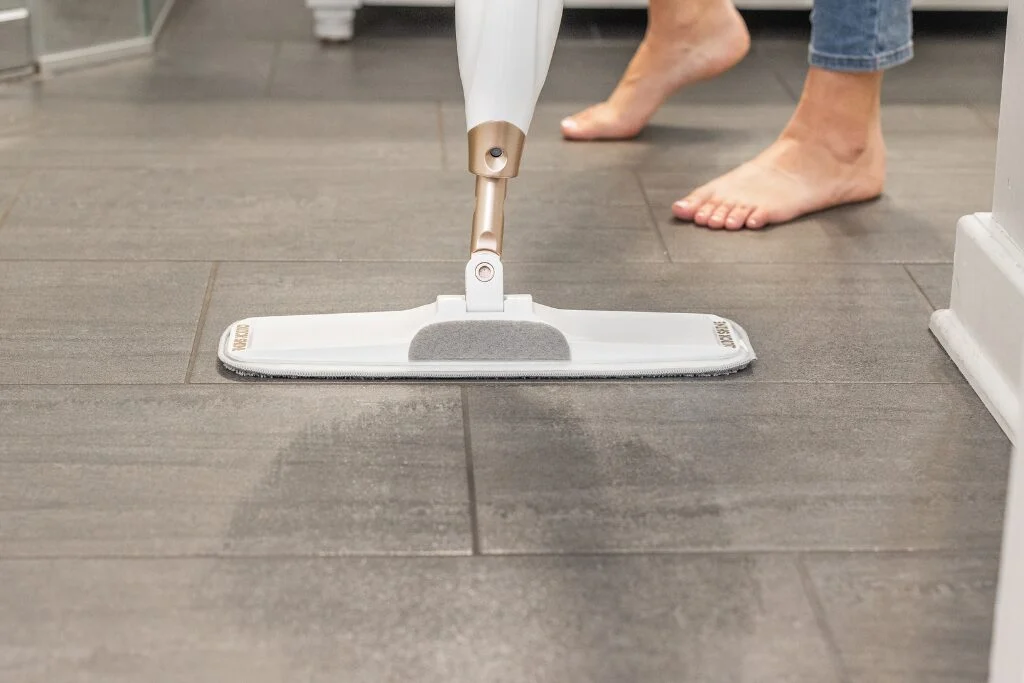
Ceramic and porcelain tile can usually be mopped once a week, with more frequent cleaning in busy rooms.
Porcelain is generally dense and durable, but the grout and installation still require care. Do not flood the floor or allow dirty water to sit in grout lines.
How Often Should You Mop Laminate Floors?
Mop laminate floors once a week to once every two weeks.
Weekly cleaning may be suitable in busy rooms. Every two weeks may work in low-traffic spaces if you vacuum regularly and clean spills immediately.
Laminate is especially sensitive to excess water. Liquid can enter seams and affect the fiber-based core, causing:
- Swollen edges
- Raised seams
- Warping
- Peeling
- Cupping
- Permanent surface damage
Use a lightly damp microfiber pad or spray mop. Never pour water directly onto the floor.
Avoid abrasive pads and unapproved cleaners. Many laminate manufacturers also restrict steam mops because heat and vapor may penetrate joints and damage adhesives or inner layers.
How Often Should You Mop Vinyl Floors?
Mop vinyl floors approximately once a week to once every two weeks.
High-traffic luxury vinyl plank, luxury vinyl tile, and sheet vinyl may need weekly cleaning. Low-use areas may remain clean for two weeks.
Although many vinyl products resist surface moisture, the entire installation may not be waterproof. Water can still reach:
- Plank seams
- Room edges
- Damaged wear layers
- Adhesive
- The subfloor
Use a mild vinyl-safe cleaner and a damp mop. Avoid abrasive pads, excessive water, and products that leave sticky residue.
How Often Should You Mop Luxury Vinyl Plank?
Luxury vinyl plank, often called LVP, usually benefits from mopping every one to two weeks.
Sweep or vacuum every few days in busy areas. Mop sooner when you notice footprints, kitchen residue, pet marks, or visible grime.
Check the manufacturer’s care guide before using steam. Some vinyl warranties prohibit it.
How Often Should You Mop Natural Stone Floors?
Mop natural stone floors approximately every one to two weeks.
Marble, limestone, travertine, slate, and granite have different levels of porosity and chemical sensitivity. Use a cleaner specifically approved for the stone and its sealer.
Avoid acidic cleaners such as:
- Vinegar
- Lemon juice
- Citrus-based homemade solutions
- Strong bathroom acids
Acid can etch sensitive stone and leave dull, rough, or discolored areas.
Sweep or dust-mop regularly because sand and grit can scratch polished stone.
How Often Should You Mop Concrete Floors?
Finished indoor concrete can usually be mopped weekly to every two weeks.
However, the correct method depends on whether the floor is:
- Sealed
- Polished
- Painted
- Stained
- Epoxy-coated
- Unsealed
Use a cleaner approved for the finish. Unsealed concrete may absorb moisture and stains more readily.
How Often Should You Mop Cork Floors?
Cork floors generally need damp cleaning every one to two weeks, depending on traffic.
Cork is sensitive to excess water. Use minimal moisture, clean spills immediately, and follow the manufacturer’s instructions.
Avoid steam unless it is specifically approved.
How Often Should You Mop Kitchen Floors?
Mop a busy kitchen floor about two or three times per week.
Kitchen floors collect:
- Food crumbs
- Grease droplets
- Sauce
- Flour
- Drink spills
- Pet food
- Water near the sink
- Mud from exterior doors
A lightly used kitchen may only need weekly mopping, but visible spills should always be cleaned immediately.
Daily spot cleaning is often more useful than fully mopping the room every day. Wipe grease, food, and water as soon as possible, then follow your normal schedule for the full floor.
How Often Should You Mop Bathroom Floors?
Mop bathroom floors once or twice per week.
Clean sooner when you notice:
- Hair
- Dust
- Water around the shower
- Soap residue
- Muddy footprints
- Grime around the toilet
- Sticky product spills
Remove standing water immediately. Even tile bathrooms can develop problems when moisture sits in grout, reaches edges, or enters damaged areas.
How Often Should You Mop Entryways?
Mop entryways and mudrooms once or twice per week, or more often during wet or muddy weather.
These areas collect outdoor dirt faster than most rooms. Sweep or vacuum frequently so sand and grit do not spread through the house.
Place one mat outside and another inside the entrance. This simple setup catches more dirt before it reaches the floor.
How Often Should You Mop Bedrooms?
Most bedrooms need mopping every one to two weeks.
A low-traffic bedroom may stay clean longer, particularly in a shoes-off household. Bedrooms used by children or pets may require weekly cleaning.
Vacuum or sweep between mopping sessions to control dust, hair, and debris.
How Often Should You Mop Living Rooms?
Mop living-room floors about once a week in an active household.
If the room receives little traffic, every two weeks may be enough. Homes with pets, children, frequent visitors, or indoor shoes may need more frequent cleaning.
How Often Should You Mop With Pets?
Many pet owners benefit from mopping high-use areas two or three times per week.
Focus on:
- Entryways
- Feeding areas
- Kitchens
- Living rooms
- Litter-box surroundings
- Sleeping areas
Clean accidents immediately and use a floor-compatible, pet-appropriate cleaner according to the label.
During rainy weather, wipe paws before pets enter. Place washable mats under food and water bowls to reduce full-floor cleaning.
How Often Should You Mop With Children?
Homes with young children may need mopping two or three times per week in kitchens, dining areas, and play spaces.
However, you do not need to wet-mop every room daily. Clean visible spills and sticky areas immediately, then follow the flooring-specific schedule.
Signs Your Floor Needs Mopping
Do not wait for your scheduled day when the floor clearly needs attention.
Mop sooner when you notice:
- Sticky patches
- A dull or cloudy surface
- Visible footprints
- Dark grout lines
- Grit underfoot
- Muddy paw prints
- Food residue
- Hair and dust in corners
- Spilled drinks
- Grease near the stove
- Unpleasant residue around pet bowls
The floor’s condition is often a better guide than the calendar.
Should You Sweep or Vacuum Before Mopping?
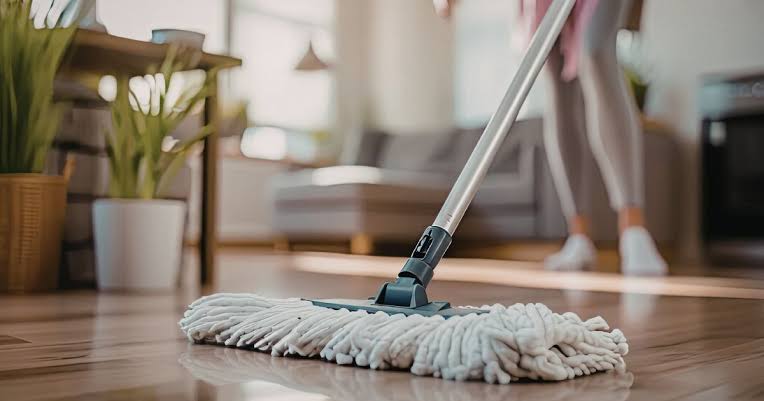
Yes. Always sweep or vacuum before mopping.
Dry cleaning removes loose:
- Dust
- Hair
- Crumbs
- Sand
- Soil
- Pet fur
- Small debris
Without this step, the mop may push damp dirt around instead of removing it. Grit can also scratch hardwood, laminate, vinyl, and polished stone.
Use a vacuum setting and attachment suitable for hard floors. Avoid rotating brush rolls that may scratch delicate finishes unless the manufacturer says they are safe.
What Is the Best Mop for Floors?
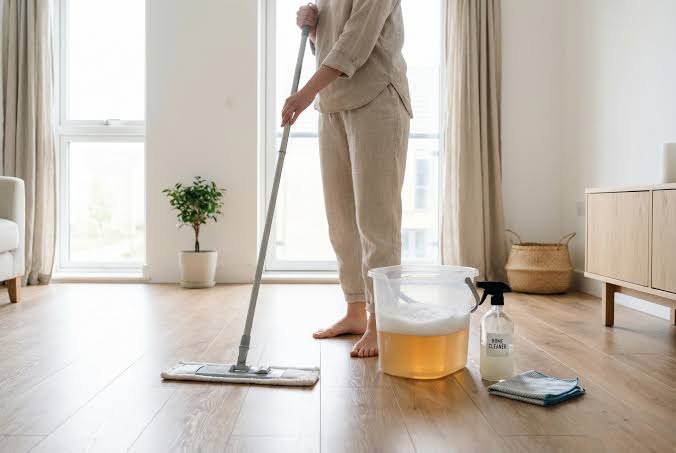
Microfiber flat mop
A microfiber flat mop works well for many surfaces because it offers good moisture control and can collect fine dirt.
It is especially useful for:
- Hardwood
- Laminate
- Engineered wood
- Vinyl
- Light tile cleaning
Keep several clean pads available so you can replace them when they become dirty.
Spray mop
A spray mop allows you to apply a small amount of cleaner directly in front of the pad. This can be useful for laminate, vinyl, and wood when the manufacturer permits damp cleaning.
String or spin mop
String and spin mops can work well on durable tile floors. However, they may hold more water than a flat microfiber mop, so wring them thoroughly.
Steam mop
Steam mops are not safe for every floor.
Avoid steam on hardwood, laminate, cork, many vinyl products, adhesive-installed floors, unsealed surfaces, and warranty-sensitive flooring unless the manufacturer explicitly allows it.
Heat and vapor may affect seams, finishes, adhesives, and inner layers.
How Much Water Should You Use?
Use as little water as necessary.
The floor should look lightly damp, not flooded. It should also dry within a reasonable period without puddles.
Too much water can:
- Enter seams
- Damage wood
- Swell laminate
- Affect adhesive
- Leave streaks
- Carry dirt into grout
- Create slippery conditions
Wring the mop thoroughly before applying it to moisture-sensitive floors.
How Often Should You Change Mop Water?
Change mop water whenever it becomes visibly dirty.
Dirty water can spread residue across the floor instead of removing it. In a large or heavily soiled room, you may need to replace the water several times.
When using a flat mop, replace or rinse the pad when it becomes too dirty to keep collecting debris effectively.
Can You Mop With Only Water?
Plain water may remove light dust and some surface dirt, but it may not dissolve grease, sticky residue, or dried spills.
Use a cleaner when necessary, but make sure it is approved for the flooring and finish.
Do not assume that a homemade cleaner is safe. Vinegar, dish soap, bleach, essential oils, and baking soda can damage some floors or leave residue.
Can You Mop Too Often?
Yes. Mopping too often can create problems, especially on moisture-sensitive floors.
Potential issues include:
- Swelling
- Warping
- Dull finishes
- Sticky residue
- Streaking
- Damaged seams
- Worn protective coatings
- Moisture reaching the subfloor
Instead of wet-mopping the entire room every day, use spot cleaning for spills, footprints, and small dirty areas.
Should You Mop Every Day?
Most homes do not need full daily mopping.
Daily mopping may be useful in:
- Very busy commercial-style kitchens
- Homes with frequent pet accidents
- Mudrooms during severe weather
- Areas with constant spills
- Special hygiene-sensitive situations
For normal households, daily sweeping, vacuuming, or spot cleaning is usually enough between full mopping sessions.
How to Mop Floors Correctly
Follow this simple method:
- Remove toys, rugs, cords, and lightweight furniture.
- Sweep or vacuum the floor.
- Spot-treat dried spills with an approved method.
- Prepare the correct cleaner and dilution.
- Start in the farthest corner.
- Work toward the exit.
- Mop in small sections.
- Use minimal water.
- Change dirty water or pads.
- Let the floor dry before normal traffic resumes.
Do not mix cleaning chemicals. Some combinations can create dangerous fumes or damage surfaces.
Common Mopping Mistakes
Using too much water
More water does not always mean a cleaner floor. It can cause damage, streaks, and longer drying times.
Skipping vacuuming
Mopping over crumbs and grit turns loose debris into wet grime.
Using the wrong cleaner
A cleaner suitable for tile may damage stone, wood, laminate, or a protective finish.
Adding too much product
Excess cleaner can leave a sticky film that attracts more dirt.
Reusing dirty water
Cloudy mop water can redistribute grime.
Using one dirty pad for the whole house
Replace or rinse pads as they become soiled.
Ignoring spills
Spills can stain, swell, etch, or weaken flooring when left untreated.
Using steam without checking
Steam can damage several common flooring materials and may void warranties.
How to Mop Less Often
You can extend the time between full mopping sessions by preventing dirt from spreading.
- Place mats outside and inside entrances.
- Remove shoes indoors.
- Sweep high-traffic areas regularly.
- Vacuum pet hair and crumbs.
- Clean spills immediately.
- Wipe muddy paws.
- Use washable mats under pet bowls.
- Sweep after cooking.
- Spot-clean sticky marks.
- Wash mop pads after use.
- Keep outdoor walkways clean.
These habits reduce buildup without exposing the entire floor to unnecessary moisture.
A Practical Weekly Mopping Schedule
Daily
- Wipe spills.
- Remove crumbs.
- Clean pet accidents.
- Dry standing water.
- Spot-clean sticky areas.
Two or three times per week
- Vacuum kitchens and entryways.
- Clean around pet bowls.
- Mop a busy kitchen when needed.
- Remove muddy footprints.
Weekly
- Mop high-traffic floors.
- Clean bathrooms.
- Mop tile kitchens.
- Wash reusable mop pads.
- Inspect grout and edges.
Every one to two weeks
- Mop low-traffic bedrooms.
- Clean hardwood or laminate when needed.
- Mop natural stone with an approved product.
- Move lightweight furniture and clean underneath it.
Frequently Asked Questions
Most normal households should mop floors once a week. Busy kitchens, bathrooms, pet areas, and entryways may need cleaning two or three times per week.
Yes, weekly mopping is enough for many homes when you also vacuum regularly and clean spills immediately. High-traffic households may need more frequent cleaning.
Mop hardwood floors weekly to every two weeks with a lightly damp microfiber mop. Avoid excess water and follow the finish manufacturer’s instructions.
Mop laminate weekly to every two weeks. Use very little moisture and clean spills immediately to reduce the risk of swelling and seam damage.
Mop tile floors about once a week. Busy kitchens and bathrooms may need mopping twice per week.
Mop vinyl every one to two weeks, or weekly in high-traffic areas. Use a mild cleaner and avoid flooding seams and edges.
Pet owners may need to mop high-use areas two or three times per week. Clean accidents, muddy paw prints, and food spills immediately.
Most kitchens do not need full daily mopping. Spot-clean spills and crumbs each day, then mop the entire floor two or three times per week if the kitchen is heavily used.
Yes. Excessive wet cleaning may damage wood, laminate, cork, vinyl seams, finishes, and adhesives. Use spot cleaning between full mopping sessions.
Yes. Vacuuming or sweeping removes grit, hair, dust, and crumbs so the mop can clean more effectively.
No. Steam may damage hardwood, laminate, cork, some vinyl, adhesive-installed floors, and unsealed surfaces. Only use it when the floor manufacturer explicitly approves it.
A flat microfiber mop is usually a practical choice because it provides better moisture control than a heavily soaked string mop.
Mop when the floor feels gritty, looks dull, shows footprints, has sticky areas, develops dark grout, or contains visible food, mud, or pet residue.
Final Answer: How Often Should You Mop Your Floors?
So, how often should you mop your floors? Most homes should begin with a weekly schedule.
Mop busy kitchens, bathrooms, entryways, and pet areas two or three times per week when needed. Clean hardwood, laminate, vinyl, stone, and low-traffic rooms weekly to every two weeks, depending on the material and visible dirt.
More importantly, do not rely only on the calendar. Mop sooner when you notice sticky patches, footprints, dark grout, dullness, grit, mud, or food residue.
Vacuum first, use minimal water, choose a floor-approved cleaner, and follow the manufacturer’s care instructions. A balanced routine keeps floors clean without damaging their finish or exposing them to unnecessary moisture.