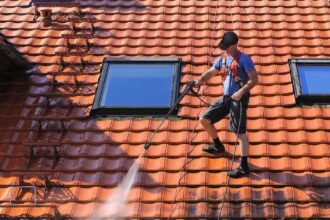
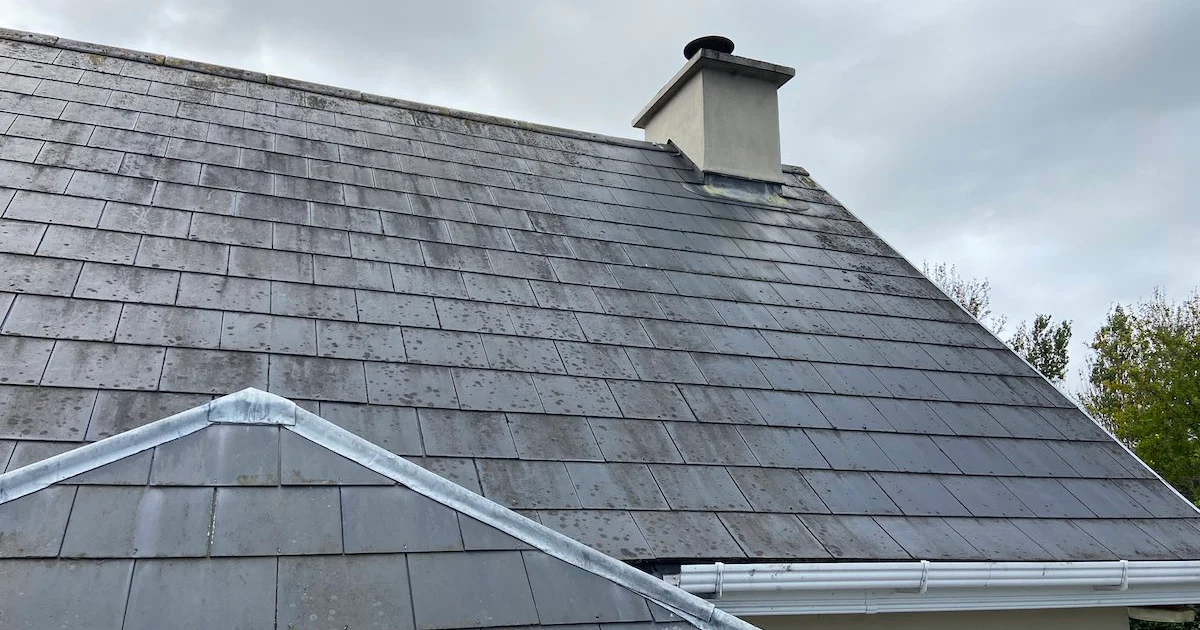

Soft wash roof cleaning is one of the smartest ways to refresh the outside of a home without using harsh pressure. A roof takes a beating from rain, sun, leaves, moss, and algae. Over time, it can look older than it really is. Thankfully, soft washing can help restore a cleaner, brighter look.
What Is Soft Wash Roof Cleaning?
Soft wash roof cleaning is a low pressure cleaning method that uses a special roof cleaning solution to break down stains, algae, moss, mildew, and dirt. Instead of blasting the roof with strong water pressure, the solution does most of the work. Think of it like soaking a stained shirt before washing it. The cleaner loosens the problem first, so heavy force is not needed. This makes soft roof cleaning a safer choice for many roofing materials, especially asphalt shingles.
Why Roof Cleaning Matters for Your Home?
A dirty roof does more than hurt curb appeal. Black streaks on roof shingles, moss patches, and mildew can make the whole house look tired. Also, organic growth can hold moisture against the roof surface. Over time, this may lead to faster wear, lifted shingles, or clogged gutters. Regular residential roof cleaning helps protect the roof, improve water flow, and keep the home exterior looking cared for. A clean roof is like a fresh haircut for the house.
Soft Wash vs. Pressure Washing
Soft washing and pressure washing both clean surfaces, but they work in very different ways. Soft washing roof surfaces uses cleaning chemicals and gentle water flow. Pressure washing uses high-force water to remove dirt. While pressure washing works well on hard surfaces like concrete, it can be too rough for roofs. For shingle roof cleaning, low pressure roof cleaning is usually the safer choice because it cleans without stripping granules or forcing water under the roofing material.
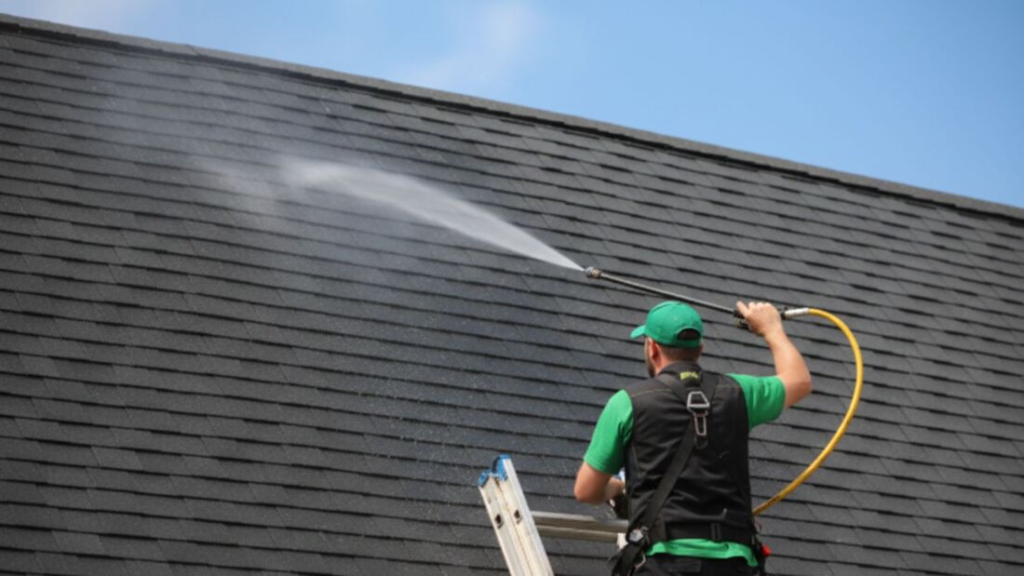
- How soft washing works?
Soft washing roof surfaces starts with applying a roof cleaning solution. The solution breaks down algae, moss, mildew, and stains. After it sits for the right amount of time, the roof is gently rinsed or left to let rain finish the process, depending on the method used.
- How pressure washing works?
Pressure washing uses a strong stream of water to knock away dirt. This can work well for driveways, patios, and some siding. However, on a roof, high pressure can loosen shingles, damage protective granules, and push water into places where it should not go.
- Which method is safer for roofs?
For most homes, soft wash roof cleaning is safer than pressure washing. It uses gentle water pressure and lets the cleaning solution do the heavy lifting. This matters because a roof is not a sidewalk. It has layers, seams, and materials that need careful handling.
Benefits of Soft Wash Roof Cleaning
Soft wash roof cleaning offers more than a better-looking roof. It helps remove harmful growth, supports long-term roof care, and can make the whole home feel fresher from the street. Because it uses low pressure, it is often a smart choice for homeowners who want results without risking roof damage. It also fits well into a simple home maintenance routine.
- Improves curb appeal
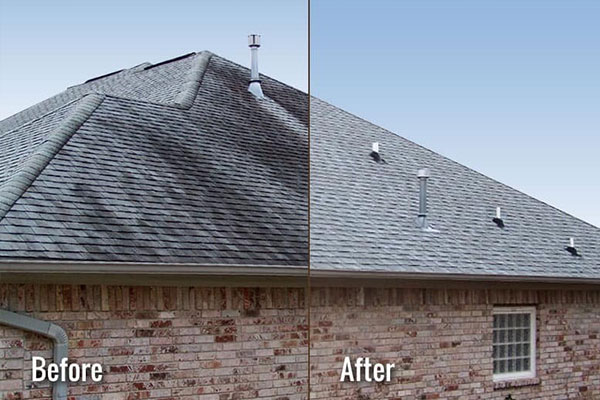
A clean roof can change the look of the entire home. Black stains, green moss, and dull patches can make even a well-kept house look neglected. After soft roof cleaning, the roof often looks brighter, cleaner, and newer.
- Helps protect roof materials
Moss and algae can trap moisture. That moisture may wear down shingles over time. Soft washing helps remove these growths gently, which may help roof materials last longer when paired with regular inspections and repairs.
- Removes algae, moss, and stains
Soft washing is useful for roof stain removal because it targets the source of the stain. It can treat algae, moss, lichen, mildew, and dirt instead of only washing the surface. This helps the roof stay cleaner for longer.
- May support better home value
A clean roof can make a home look better maintained. This matters when selling, refinancing, or simply improving the property’s appearance. Buyers often notice the roof first because it takes up so much visual space.
- Fits home maintenance plans
Soft wash roof cleaning fits naturally with other exterior care tasks. When added to seasonal maintenance, it helps prevent buildup from getting out of control. It is easier to clean light growth than to fight years of thick moss.
Common Roof Problems Soft Washing Can Fix
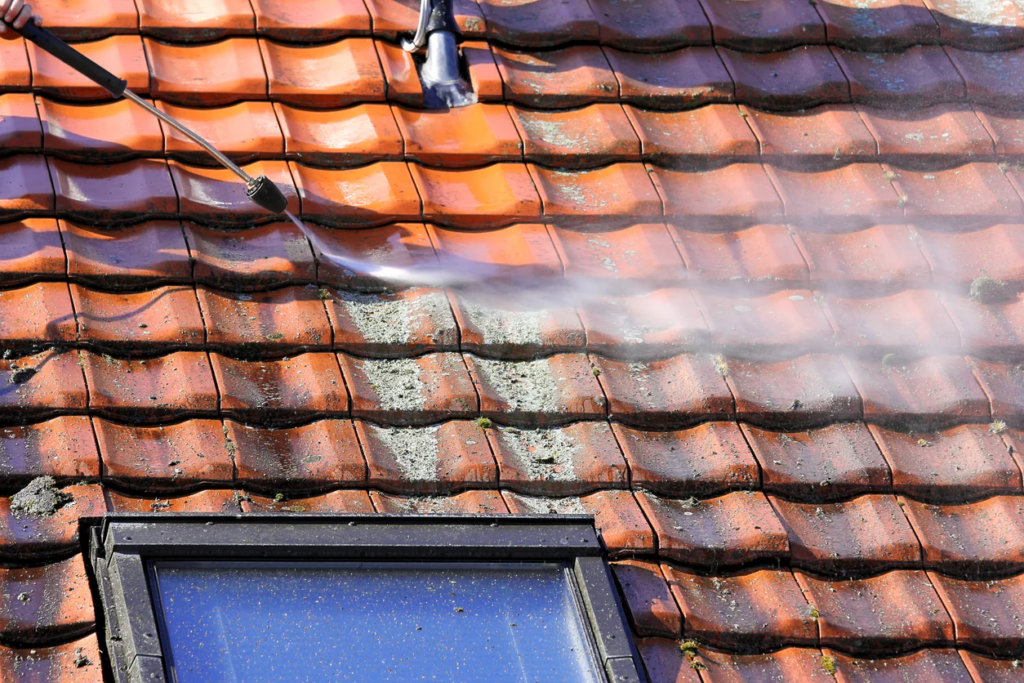
Many roof stains come from living growth, not just dirt. That is why regular soap and water often do not solve the problem. Soft washing uses roof cleaning chemicals that treat algae, moss, mildew, and lichen at the root level. While it cannot repair broken shingles or leaks, it can help with many common appearance and maintenance problems.
- Black streaks
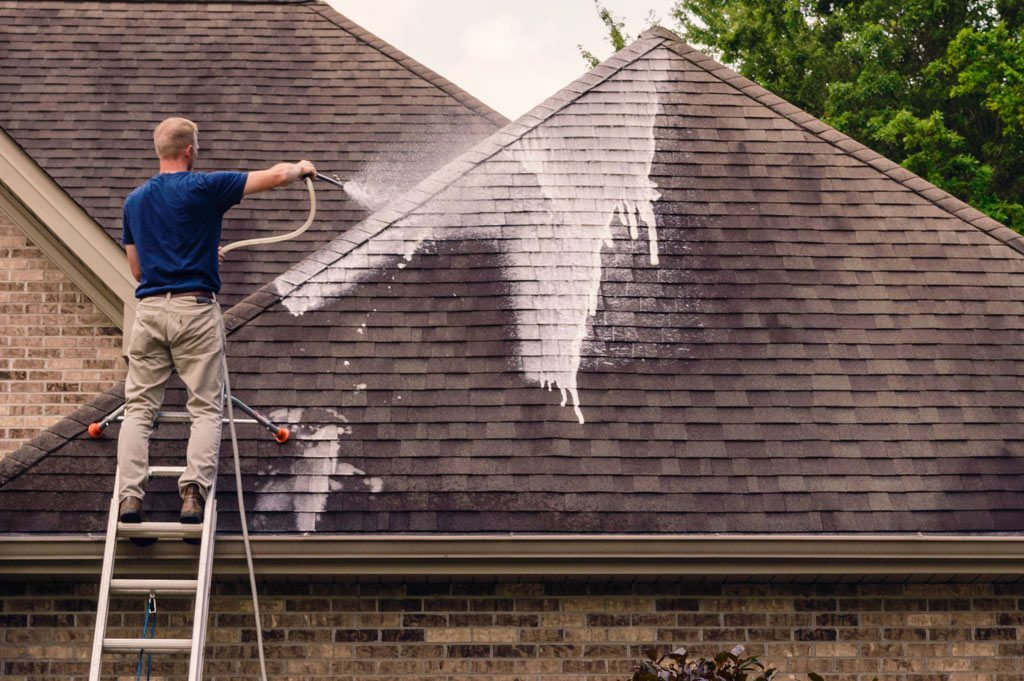
Black streaks on roof shingles are often caused by algae. These streaks can spread over time, especially in humid areas. Soft wash roof cleaning helps remove these marks and slows their return by treating the growth directly.
- Moss growth
Moss looks soft and harmless, but it can hold water like a sponge. When moss grows between shingles, it may lift edges and create weak spots. Roof moss removal through soft washing helps clear the growth without harsh scraping.
- Lichen spots
Lichen can look like pale, crusty spots stuck to the roof. It attaches tightly, so it may not disappear right away. Soft washing helps kill the growth, and then it often loosens slowly with weather and gentle rinsing.
- Dirt and mildew
Dust, pollen, leaves, and mildew can build up on the roof surface. This makes the roof look dull and dirty. A soft wash can clear away this layer and help the roof look clean without aggressive pressure.
Is Soft Wash Roof Cleaning Safe?
Soft wash roof cleaning is safe when done with the right mix, method, and care. The key is balance. The cleaning solution must be strong enough to remove algae and moss, but it must also be handled responsibly. Plants, outdoor furniture, gutters, and nearby surfaces should be protected before the work begins. A trained professional will wet plants, cover delicate items, control runoff, and rinse carefully. Like any cleaning method, soft washing can cause problems if someone uses the wrong chemicals, too much solution, or poor technique.
When Should You Clean Your Roof?
The best time to clean a roof is before the problem becomes severe. Small stains and light moss are easier to manage than thick growth. Many homes need roof cleaning when dark streaks appear, after long wet seasons, or before a big exterior refresh. Timing also depends on shade, tree cover, weather, and roof material.
- Visible stains or streaks
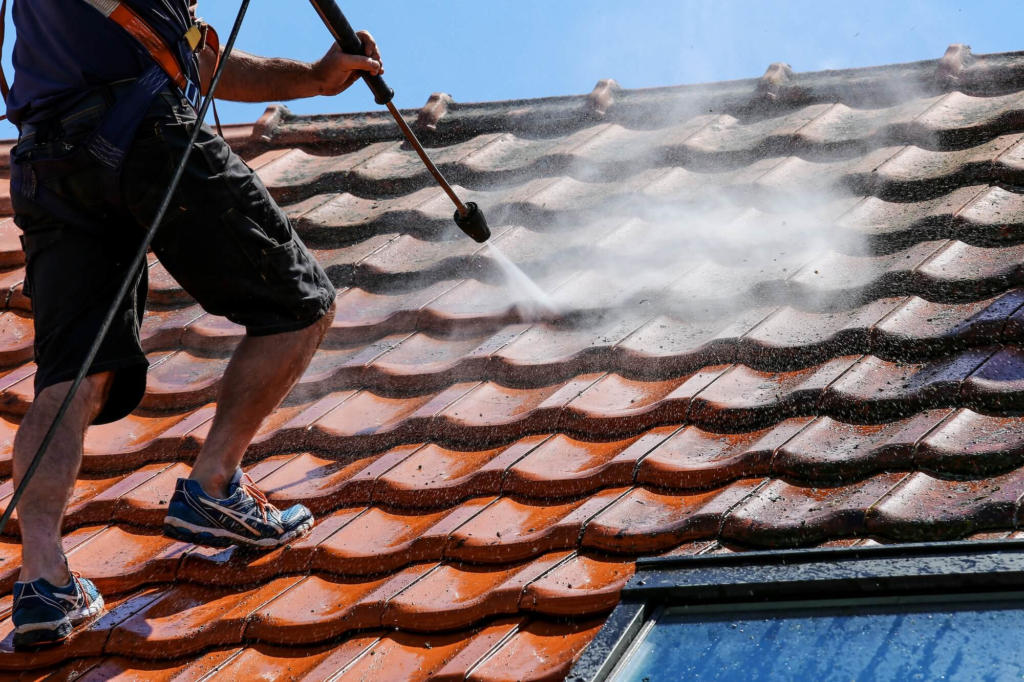
If the roof has black streaks, green patches, or uneven discoloration, it may be time for soft wash roof cleaning. These marks usually do not go away on their own. In fact, they often spread when moisture and shade are present.
- Moss or algae growth
Moss and algae are clear signs that the roof needs attention. If the growth is light, soft washing can often handle it well. If it is thick, a professional may need to treat it in stages.
- Before selling your home
Before listing a home, roof stain removal can make a big difference. A stained roof may make buyers wonder about age and repairs. A clean roof helps the home look better cared for from the first photo.
- After long wet seasons
Rainy months can create the perfect setting for algae, mildew, and moss. After a long wet season, check the roof for stains, soft green patches, and clogged areas. Cleaning early can prevent heavier buildup later.
How Soft Wash Roof Cleaning Works?
Soft wash roof cleaning follows a simple process, but each step matters. The goal is to clean the roof while protecting the home, plants, and roofing materials. A rushed job can create damage or leave stains behind. A careful job works more like a treatment than a quick rinse.
- Roof inspection
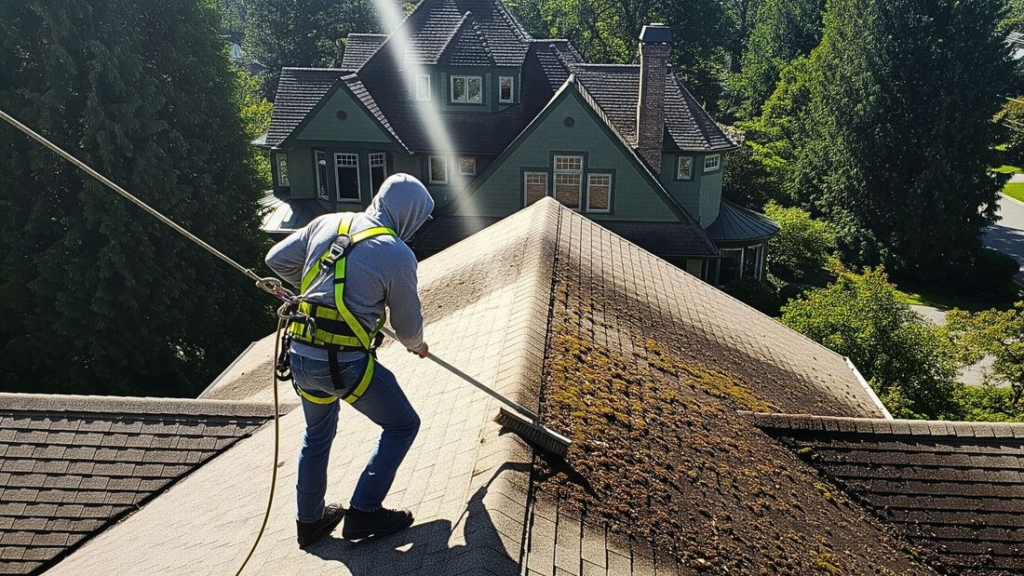
The process starts with a roof inspection. This helps spot cracked shingles, loose flashing, heavy moss, clogged valleys, or weak areas. If the roof already has damage, cleaning should wait until repairs are handled.
- Protecting plants and outdoor décor
Before applying any roof cleaning solution, nearby plants, patio furniture, garden décor, and outdoor rugs should be protected. Plants are usually watered before and after service. Delicate items should be moved away from runoff areas.
- Applying the cleaning solution
Next, the cleaning solution is sprayed across the roof with low pressure. The solution targets stains, algae, moss, and mildew. It should be applied evenly, much like painting a wall with a steady hand.
- Letting the solution work
After application, the solution needs time to work. This dwell time allows the roof cleaning chemicals to break down organic growth. Rushing this step is like wiping a cleaner off the counter before it has done its job.
- Rinsing and final check
Some roofs are gently rinsed after treatment, while others are left for rain to wash away dead growth over time. A final check helps confirm that gutters, plants, siding, and outdoor spaces are clean and safe.
DIY Soft Wash Roof Cleaning: What to Know?
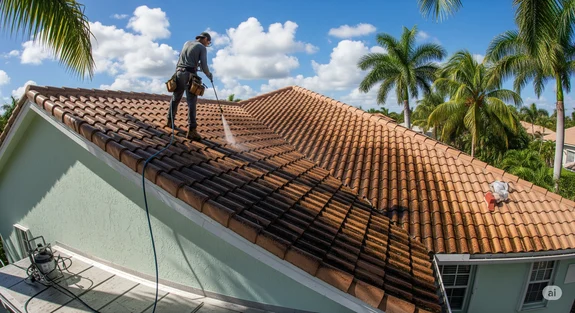
DIY roof cleaning can sound simple, but roofs are risky places to work. The slope, height, wet surface, and chemicals create a mix that can be dangerous. While small touch-ups may be possible from the ground with the right tools, full roof cleaning is often better left to trained pros. Safety should always come before saving money.
- Basic tools needed
DIY soft washing usually requires a low pressure sprayer, garden hose, protective gloves, eye protection, non-slip footwear, and a proper roof cleaning solution. You may also need tarps, plant covers, and a way to control runoff.
- Safety risks
The biggest risk is falling. Wet roofs are slippery, and cleaning solution can make them even slicker. Chemical splashes can also irritate skin and eyes. If you feel unsure, skip the ladder and call a professional.
- Roof type concerns
Different roofs need different care. Asphalt shingles, metal roofs, and tile roofs do not all respond the same way. For example, anyone with a clay or concrete tile roof should read more about tile roof cleaning before trying a DIY method.
- When DIY is not worth it?
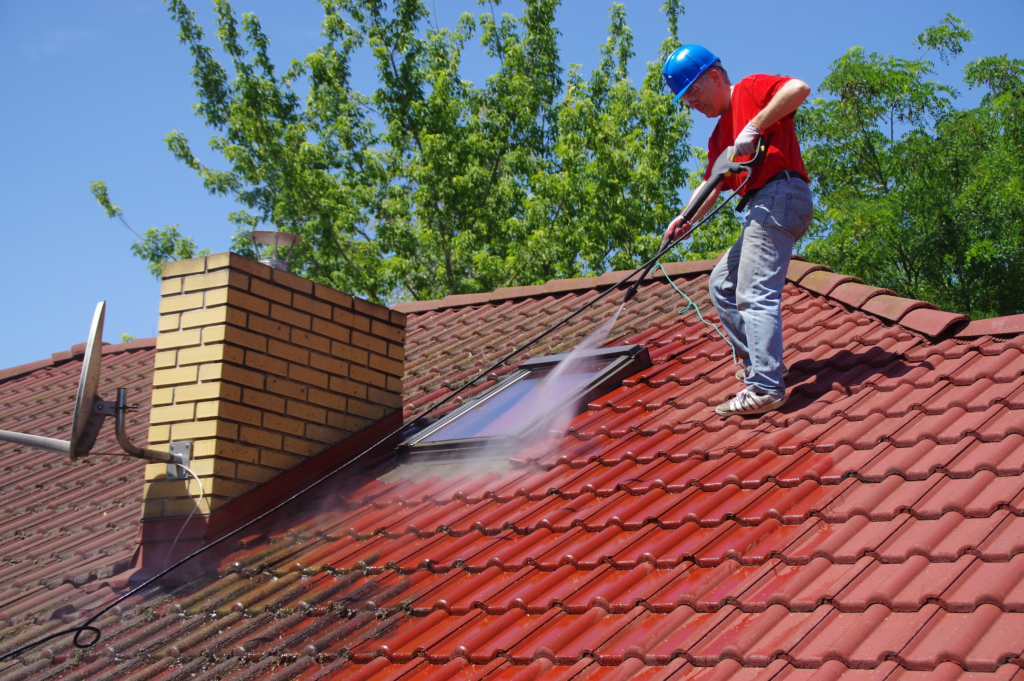
DIY roof cleaning is not worth it if the roof is steep, high, old, damaged, or covered in heavy moss. It is also risky if you do not know how to mix roof cleaning chemicals safely. A small mistake can harm plants, stain siding, or damage shingles. In many cases, professional roof cleaning costs less than fixing a bad DIY result.
Professional Soft Wash Roof Cleaning
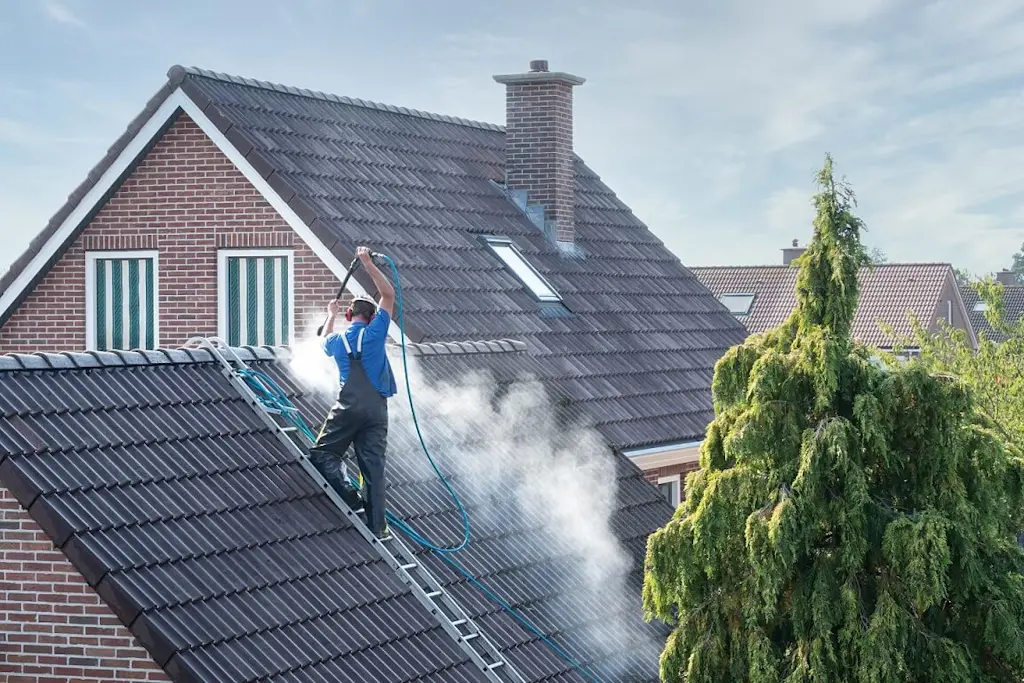
Professional soft wash roof cleaning is often the best choice for safety, quality, and peace of mind. Trained cleaners understand roof materials, chemical mixes, runoff control, and plant protection. This is especially helpful for busy households, rental properties, or second homes. In the same way people use trusted home cleaning services to keep indoor spaces fresh, professional roof cleaning can keep the outside looking cared for.
- What professionals do differently?
Professionals use proper equipment, controlled pressure, and cleaning mixes suited to the roof. They also know how to protect landscaping, rinse the right areas, and spot roof problems before cleaning makes them worse.
- Questions to ask before hiring
Ask if the company uses low pressure roof cleaning, what solution they apply, how they protect plants, and whether they carry insurance. Also ask if they have experience with your roof type and local weather conditions.
- What to expect during the service?
During service, the crew will inspect the roof, prepare the area, apply the cleaning solution, allow it to work, and rinse or finish as needed. Some stains may fade over several days as the treatment keeps working.
How Much Does Soft Wash Roof Cleaning Cost?
The cost of soft wash roof cleaning depends on size, slope, height, condition, access, and local labor rates. A small, simple roof usually costs less than a large, steep roof with heavy moss. Instead of choosing only by price, compare value. A careful service that protects plants and shingles is worth more than a cheap job that creates damage.
- Roof size
A larger roof takes more time, more cleaning solution, and more labor. Most companies factor roof size into the estimate. Complex roof shapes with many peaks, valleys, and sections may also raise the cost.
- Roof condition
Light stains are easier to treat than thick moss or lichen. Heavy roof moss removal may require extra care, repeat treatment, or manual cleanup. The worse the buildup, the more time the job may take.
- Roof height and access
A low, easy-to-reach roof is simpler to clean. A tall, steep, or hard-to-access roof may require special equipment and more safety setup. This can increase the final price.
- Local service pricing
Prices vary by area. Labor costs, demand, climate, and competition all play a role. Homes in damp regions may have more roof cleaning companies, while dry areas may have fewer options.
- DIY vs. professional cost
DIY roof cleaning may seem cheaper at first. However, tools, safety gear, chemicals, and plant protection supplies add up. Also, one slip or roof damage issue can cost far more than hiring a professional.
How Often Should You Soft Wash Your Roof?
Most homes benefit from soft wash roof cleaning every few years, but there is no one-size-fits-all schedule. A roof under heavy shade may need cleaning more often than a roof that gets full sun. Homes near trees, lakes, or humid weather may also see faster algae and moss growth. The best plan is to check the roof at least twice a year. If stains are light, you can act early. If the roof still looks clean, you can wait. Maintenance should follow the roof’s real condition, not a fixed calendar.
Tips to Keep Your Roof Cleaner Longer
After soft washing, a few simple habits can help the roof stay cleaner. The goal is to reduce moisture, shade, and debris. Algae and moss love damp, still places. When sunlight, airflow, and drainage improve, the roof becomes less welcoming to growth. Small maintenance steps can stretch the time between cleanings.
- Trim nearby trees
Tree branches can drop leaves, block sunlight, and hold moisture over the roof. Trim back branches that touch or hang close to the roofline. This helps the roof dry faster after rain.
- Clean gutters often
Clean gutters help water move away from the roof and home. When gutters clog, water can back up and create damp edges where moss grows. For more exterior care tips, see this guide on roof and gutter cleaning.
- Improve sunlight and airflow
Sunlight and airflow help dry the roof. If one side of the roof always stays damp, algae and mildew may return quickly. Trimming trees and clearing debris can help fresh air move across the surface.
- Check the roof after storms
Storms can leave branches, leaves, and dirt on the roof. After heavy wind or rain, check from the ground if possible. Look for debris piles, loose shingles, or areas where water may sit.
- Schedule regular inspections
A roof inspection helps catch small problems early. You do not need to climb up yourself. A professional can check shingles, flashing, gutters, and growth before small issues become expensive repairs.
Soft Wash Roof Cleaning and Curb Appeal
Soft wash roof cleaning can make a home look polished without a full exterior renovation. Since the roof is one of the largest visible parts of a house, stains can drag down the whole look. Once the roof is clean, other simple updates stand out more. It creates a fresh backdrop for landscaping, outdoor furniture, siding, paint, and entryway décor.
- Matching a clean roof with fresh landscaping
A clean roof pairs beautifully with fresh landscaping. Even simple garden edges, trimmed shrubs, and neat mulch can make the whole exterior look more planned. The roof sets the stage, while the yard adds the finishing touch.
- Improving outdoor living spaces
When the roof looks clean, patios, decks, and porches feel more inviting too. Small patio upgrades like better seating, outdoor lighting, or fresh planters can make the outside feel like another room.
- Making the home look newer
A stained roof can make a home look older than it is. After roof stain removal, the same house can look brighter and better maintained. It is like cleaning a cloudy window and suddenly seeing the view again.
- Budget-friendly exterior upgrades
Soft washing is often more affordable than major exterior projects. Pair it with small upgrades like a painted front door, clean gutters, trimmed plants, and fresh house numbers for a strong curb appeal boost.
Mistakes to Avoid
Soft wash roof cleaning works best when done carefully. The wrong approach can damage shingles, harm plants, or create safety problems. Before cleaning, understand what not to do. A roof is not a place for shortcuts. Careless cleaning can turn a simple maintenance task into an expensive repair.
- Using too much pressure
High pressure can remove protective shingle granules, lift shingles, and force water under the roof surface. Soft washing should mean soft pressure. The cleaning solution should do the cleaning, not a powerful water blast.
- Ignoring safety gear
Safety gear matters, even for small jobs. Gloves, goggles, non-slip shoes, and proper ladder safety can prevent injuries. If the roof is steep or wet, do not climb it. No clean roof is worth a fall.
- Skipping plant protection
Roof cleaning chemicals can harm plants if used carelessly. Always water plants before and after cleaning, cover delicate landscaping, and control runoff. Professionals should include plant protection as part of the service.
- Cleaning in bad weather
Avoid cleaning during strong wind, heavy rain, extreme heat, or freezing weather. Wind can blow chemicals where they do not belong. Rain can wash the solution away too soon. Good weather helps the cleaning work better.
- Waiting too long
Small stains are easier to treat than thick moss and lichen. Waiting too long can allow growth to spread and cling harder. Regular checks help you clean at the right time instead of waiting for a major problem.
Final Thoughts
Soft wash roof cleaning is a practical way to protect and refresh a home’s exterior. It removes black streaks, moss, algae, mildew, and stains without the harsh force of pressure washing. For many roofs, it is the cleaner, safer, and smarter method. DIY may work for small, simple cases, but professional roof cleaning is often worth it for safety and better results. When paired with clean gutters, trimmed trees, and simple curb appeal updates, a clean roof can make the whole home feel brighter, newer, and better cared for.
Frequently Asked Questions
Soft wash roof cleaning is a low pressure roof cleaning method that uses a special cleaning solution to remove algae, moss, mildew, lichen, dirt, and roof stains. Instead of blasting the roof with high pressure, the solution breaks down the buildup. This makes it a safer option for many roofing materials, especially asphalt shingles.
For most roofs, yes, soft washing is better than pressure washing. Pressure washing can be too strong for shingles and may cause damage. Soft washing roof surfaces uses gentle pressure and cleaning chemicals to treat the stains at the source. It cleans without the same risk of stripping granules or lifting shingles.
Soft washing should not damage shingles when done correctly. Problems happen when someone uses the wrong chemical mix, too much pressure, or poor technique. A trained professional understands how to clean shingles safely. If the roof is already weak or damaged, repairs should happen before cleaning.
Many homes need soft wash roof cleaning every few years. However, the timing depends on shade, trees, humidity, roof material, and local weather. If you see black streaks, moss, or mildew, it may be time to clean. A twice-yearly visual check is a smart habit.
DIY roof cleaning is possible in some simple cases, but it can be risky. Roofs are slippery, and cleaning chemicals require careful handling. If the roof is steep, high, old, or covered in heavy moss, hiring a professional is usually safer.
Results can last for several years, depending on the home’s surroundings. Shade, trees, damp weather, and poor airflow can make stains return faster. Keeping gutters clean, trimming branches, and improving sunlight can help the roof stay cleaner longer.
Soft washing can kill and loosen moss, but heavy moss may not disappear instantly. In many cases, dead moss breaks down and washes away over time. Thick roof moss removal may need extra treatment, gentle brushing, or a follow-up visit.
It can be safe for plants when proper steps are taken. Plants should be watered before and after cleaning, and delicate landscaping should be covered. Runoff should also be controlled. Professional cleaners usually include plant protection in their process.
The cost depends on roof size, height, slope, condition, access, and local pricing. Heavy moss, steep roofs, and hard-to-reach areas often cost more. It is best to get a written estimate and ask what the service includes before booking.
Yes, roof cleaning can greatly improve curb appeal. A roof with black streaks, moss, or stains can make the entire home look older. After soft roof cleaning, the home often looks brighter, cleaner, and better maintained from the street.