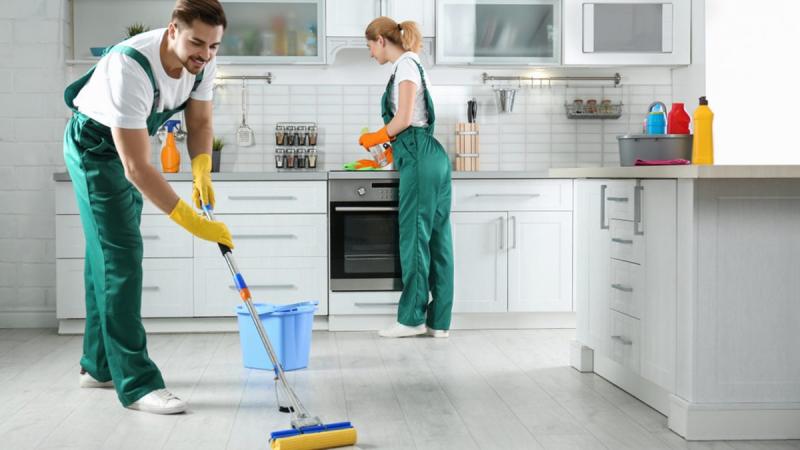

Commercial kitchen cleaning services help restaurants and food-service businesses remove grease, food residue, dirt, odors, and buildup that ordinary daily cleaning may not fully address.
A busy kitchen faces constant exposure to cooking oil, moisture, heat, spilled food, smoke, and heavy foot traffic. Although employees must clean throughout the day, they may not have enough time, equipment, or training to deep-clean floors, grout, walls, appliances, refrigeration units, vents, and spaces behind heavy equipment.
Professional cleaners can supplement the restaurant’s daily sanitation program with one-time deep cleaning or recurring service. Depending on the provider, commercial kitchen cleaning may cover cooking equipment, floors, tile and grout, walls, refrigeration areas, dining rooms, restrooms, and selected ventilation components.
What Are Commercial Kitchen Cleaning Services?
Commercial kitchen cleaning services are specialized cleaning programs for facilities where food is prepared, stored, cooked, processed, or served.
They go beyond basic sweeping, mopping, and surface wiping. A professional cleaning company may use commercial degreasers, floor machines, extraction equipment, vapor-steam systems, hot-water equipment, brushes, and other tools to remove difficult buildup.
Services may be arranged as:
- Nightly cleaning
- Weekly or biweekly maintenance
- Monthly deep cleaning
- Quarterly specialty cleaning
- One-time intensive cleaning
- Pre-opening cleaning
- Post-construction cleaning
- Remodel cleanup
- Inspection-readiness cleaning
- Emergency or short-notice service
However, there is no universal package. Every contract should contain a written checklist showing exactly which rooms, appliances, surfaces, and tasks are included.
Who Needs Commercial Kitchen Cleaning Services?
Professional kitchen cleaning can serve many types of food-related facilities, including:
- Full-service restaurants
- Fast-food restaurants
- Fast-casual restaurants
- Fine-dining establishments
- Cafés and coffee shops
- Bars and pubs
- Bakeries
- Catering kitchens
- Hotel kitchens
- School and university cafeterias
- Hospital food-service departments
- Assisted-living kitchens
- Corporate cafeterias
- Houses of worship
- Event venues
- Food-processing facilities
- Ghost kitchens
- Commissary kitchens
- Grocery-store preparation areas
Each facility has different risks and cleaning demands. For example, a high-volume fried-food restaurant may need more frequent floor and equipment degreasing than a small coffee shop.
What Do Commercial Kitchen Cleaning Services Include?
The exact scope depends on the provider, building layout, equipment, soil level, and selected service plan.
| Cleaning area | Commonly requested tasks |
| Cooking line | Degreasing ovens, grills, fryers, stoves and griddles |
| Floors | Sweeping, scrubbing, mopping, degreasing and extraction |
| Tile and grout | Deep scrubbing, buildup removal and optional sealing |
| Walls | Removing grease mist, splashes and food residue |
| Preparation areas | Cleaning counters, sinks, shelving and backsplashes |
| Refrigeration | Cleaning walk-ins, shelves, doors, handles and floors |
| Behind equipment | Removing grease, crumbs and hidden debris |
| Ventilation | Cleaning visible hoods, vents or exhaust components when included |
| Dining areas | Cleaning tables, chairs, booths, floors and high-touch items |
| Restrooms | Cleaning fixtures, floors, mirrors and dispensers |
| Waste areas | Cleaning trash stations, recycling areas or dumpster pads |
| Specialty projects | Construction cleanup, remodel cleanup and one-time deep cleaning |
Cooking Equipment Cleaning
Cooking equipment collects some of the heaviest grease and carbonized food buildup in a commercial kitchen.
Professional services may include cleaning:
- Ovens
- Stoves
- Ranges
- Grills
- Griddles
- Deep fryers
- Broilers
- Warming equipment
- Removable racks
- Grease trays
- Exterior appliance surfaces
Several commercial cleaning providers specifically list ovens, grills, fryers, stoves, griddles, and other kitchen appliances within their service scope.
Before work begins, the restaurant should clarify whether the service includes appliance interiors, exteriors, removable parts, heating elements, grease trays, filters, or only accessible surfaces.
Cleaners must also follow equipment-manufacturer instructions. Excessive water, steam, pressure, or harsh chemicals can damage controls, electrical components, seals, coatings, and sensitive materials.
Commercial Kitchen Floor Degreasing
Floors collect oil, water, sauces, food particles, cleaning residue, and tracked-in dirt. This buildup can leave surfaces sticky, stained, unpleasant, and slippery.
Professional floor care may involve:
- Dry sweeping
- Vacuuming
- Wet mopping
- Machine scrubbing
- Degreasing
- Hot-water cleaning
- Low-pressure washing
- Dirty-water extraction
- Edge and corner cleaning
- Cleaning beneath movable equipment
Restaurant service providers commonly list kitchen floors, dining-room floors, waiting areas, entrances, bar areas, and restroom floors among their cleaning services.
OSHA identifies oil, water, food, clutter, and cleaning work as common contributors to restaurant slips, trips, and falls. Employers should combine floor cleaning with spill procedures, warning signs, good lighting, clear walkways, appropriate mats, and suitable footwear.
Tile and Grout Cleaning
Grout lines can trap grease, soil, moisture, and odor-producing residue. Regular mopping may clean the tile surface without removing embedded buildup from porous grout.
Professional tile-and-grout cleaning may use:
- Manual scrubbing
- Rotary floor equipment
- Commercial extraction
- Hot-water cleaning
- Controlled low-pressure washing
- Soft washing
- Grout brushes
- Dirty-water recovery
Some providers also offer grout sealant. A suitable sealer may help limit the amount of moisture and soil absorbed by grout, although it does not eliminate the need for routine cleaning. Restaurant-cleaning companies commonly list tile, grout, and grout-sealing work as optional services.
Walls, Backsplashes and Preparation Areas
Cooking grease does not remain on the equipment. Fine droplets can settle on walls, backsplashes, shelving, vents, counters, and nearby surfaces.
A deep-cleaning service may address:
- Painted walls
- Stainless-steel wall panels
- Backsplashes
- Countertops
- Sinks and faucets
- Preparation tables
- Shelving
- Cabinet exteriors
- Storage surfaces
- Food-service stations
The cleaning method must suit the surface. Strong degreasers or abrasive tools may damage paint, natural stone, plastic laminates, seals, or polished finishes.
Walk-In Refrigerator and Freezer Cleaning
Some commercial kitchen cleaning services include walk-in refrigerators, walk-in freezers, refrigeration units, shelves, racks, doors, handles, and floors.
Before booking this work, confirm whether the cleaners will handle:
- Food removal
- Shelf removal
- Interior walls
- Door gaskets
- Drain areas
- Condenser or evaporator components
- Ice buildup
- Fans and electrical controls
- Floor cleaning
- Product replacement
Food must remain protected and held at safe temperatures. In addition, excessive water should not be sprayed around electrical components, fans, controls, or open food.
Cleaning Behind and Beneath Equipment
The areas behind ovens, fryers, refrigerators, preparation tables, and storage racks can collect hidden grease, crumbs, packaging, and debris.
A deep-cleaning crew may move lightweight or portable items to reach these spaces. However, the cleaning agreement should identify who is responsible for:
- Moving heavy appliances
- Disconnecting gas lines
- Disconnecting electrical equipment
- Reconnecting appliances
- Checking for leaks
- Confirming safe operation
Only qualified personnel should disconnect or move equipment connected to gas, electricity, plumbing, or built-in ventilation systems.
Kitchen Hood and Exhaust Cleaning
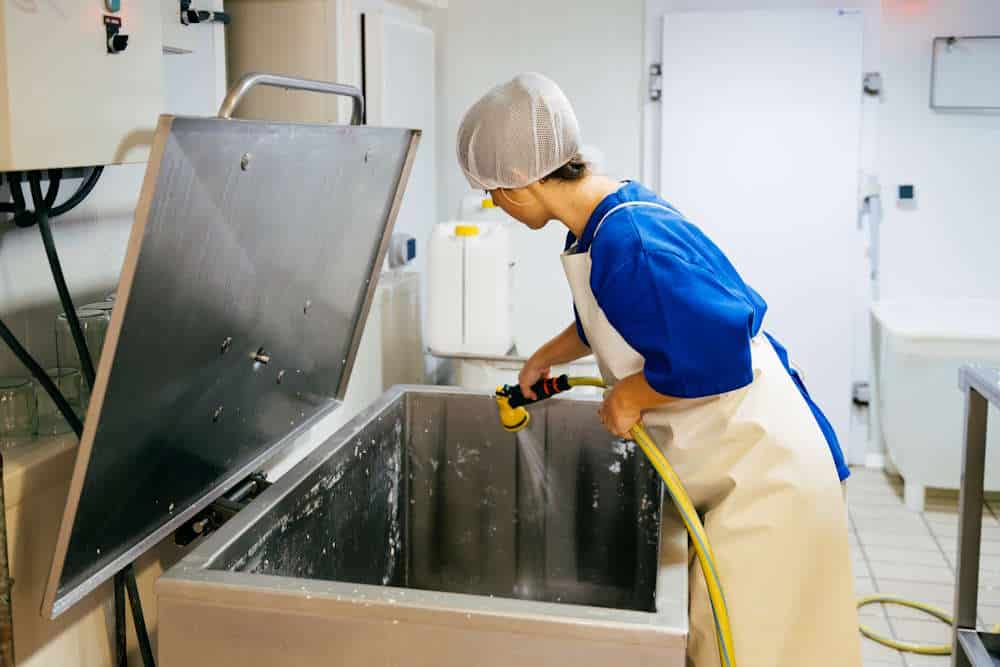
Some kitchen-cleaning companies offer visible hood, vent, fan, or exhaust cleaning. However, general surface cleaning is not necessarily the same as a complete grease-exhaust-system service.
A full exhaust-system scope may include:
- Hood interiors
- Filters
- Grease cups
- Plenums
- Ductwork
- Access panels
- Exhaust fans
- Rooftop components
- Before-and-after documentation
- Cleaning certificates or stickers
NFPA 96 addresses ventilation control and fire protection for commercial cooking operations, including exhaust-duct systems. Businesses should confirm that the provider, scope, cleaning interval, and documentation meet the requirements adopted by their local authority.
Never assume that wiping the visible exterior of a hood qualifies as complete exhaust-system cleaning.
Dining Rooms and Customer Waiting Areas
Commercial kitchen cleaning services may extend into front-of-house areas.
Possible tasks include:
- Cleaning tables
- Wiping chairs
- Cleaning booths
- Vacuuming carpets
- Treating food and beverage stains
- Cleaning upholstery
- Mopping floors
- Cleaning entrances
- Cleaning waiting areas
- Wiping menus
- Wiping condiment containers
- Cleaning windows
- Emptying trash and recycling
Restaurant-cleaning providers frequently advertise service for dining rooms, bar areas, waiting areas, upholstered seating, carpets, windows, and high-touch items.
Restroom Cleaning
Although restroom cleaning is not always part of a kitchen package, many restaurant-cleaning companies offer it as an additional service.
A restroom program may include:
- Toilets
- Urinals
- Sinks
- Faucets
- Mirrors
- Counters
- Floors
- Door handles
- Dispensers
- Trash removal
- Soap restocking
- Paper towel restocking
- Toilet paper restocking
The contract should state whether supplies are included in the price or billed separately.
Commercial Kitchen Cleaning Methods
Professional cleaning companies use different methods based on soil type, surface material, access, drainage, and equipment limitations.
Manual Scrubbing
Manual scrubbing uses brushes, pads, cloths, scrapers, detergents, and degreasers to loosen residue.
It remains useful for:
- Corners
- Equipment edges
- Small appliances
- Grout lines
- Detailed surfaces
- Areas around controls
- Spaces where water pressure is unsuitable
Cleaners should use products that match the surface and follow all label directions.
Machine Floor Scrubbing
Floor machines can agitate grease and embedded soil more consistently than ordinary mopping. Depending on the machine, the process may also recover dirty water.
Before machine cleaning, the provider should inspect the floor for:
- Loose tiles
- Cracked grout
- Damaged coatings
- Uneven surfaces
- Open drains
- Electrical cords
- Water-sensitive materials
Hot-Water and Pressure Cleaning
Some providers use hot-water or pressure-washing systems for suitable commercial-kitchen surfaces. These systems may help loosen heavy grease and grime on durable floors, walls, loading areas, and waste zones.
However, high pressure is not appropriate for every kitchen. Overspray can reach:
- Electrical outlets
- Appliance controls
- Open food
- Packaging
- Delicate finishes
- Damaged grout
- Wall joints
- Refrigeration equipment
- Water-sensitive flooring
Indoor pressure cleaning also requires proper drainage and wastewater control.
Vapor-Steam Cleaning
Vapor-steam systems use heated water vapor to loosen grease and soil. Providers may use steam on suitable equipment, racks, corners, joints, counters, and hard surfaces.
Steam can reduce the amount of free water used, but it does not automatically prove that a surface has been sanitized. Results depend on:
- Temperature at the target surface
- Contact time
- Distance from the surface
- Attachment type
- Soil level
- Surface material
- Operator technique
Steam may damage unsealed wood, sensitive electronics, thin plastic, some paint, natural stone, cracked floors, seals, and water-sensitive equipment.
Extraction Cleaning
Extraction equipment applies a cleaning solution or water and then removes the dirty liquid.
It can be useful for:
- Tile and grout
- Hard floors
- Carpets
- Upholstery
- Mats
- Selected wall surfaces
Drying time depends on ventilation, humidity, temperature, surface porosity, and the amount of moisture applied.
Cleaning, Sanitizing and Disinfecting Are Not the Same
Businesses should not use the words cleaning, sanitizing, and disinfecting interchangeably.
Cleaning
Cleaning removes visible food, grease, dust, and other soil from a surface.
Sanitizing
Sanitizing reduces microorganisms to levels established by public-health requirements. Food-contact sanitization requires a suitable product or thermal process used at the correct concentration, temperature, and contact time.
Disinfecting
Disinfecting controls specified microorganisms on eligible surfaces through an approved process or registered product.
The FDA Food Code provides a model framework for food safety in retail and food-service establishments. However, it becomes enforceable only when adopted by the relevant state, territorial, tribal, or local authority, which may modify its provisions. The current FDA model is the 2022 Food Code together with its 2024 Supplement.
When using an EPA-registered disinfectant, the user must follow the product label. The label identifies approved surfaces, organisms, application methods, contact times, and any required post-rinse. A surface may need to remain visibly wet for the entire listed contact time.
Therefore, businesses should ask a cleaning provider for:
- Product names
- EPA registration numbers where applicable
- Safety Data Sheets
- Dilution instructions
- Approved surfaces
- Food-contact directions
- Required contact times
- Rinsing requirements
- Personal protective equipment
- Storage procedures
A claim such as “kills germs instantly” is not enough.
How Often Should a Commercial Kitchen Be Cleaned?
There is no single schedule for every restaurant.
Frequency depends on:
- Number of meals served
- Hours of operation
- Type of cooking
- Amount of grease produced
- Equipment design
- Floor material
- Ventilation
- Staffing
- Daily cleaning performance
- Local requirements
- Manufacturer instructions
- Previous inspection findings
Example Commercial Kitchen Cleaning Schedule
| Frequency | Example tasks |
| During each shift | Remove spills, clear food debris and keep walkways open |
| After each use | Clean food-contact equipment and preparation surfaces |
| Daily | Sweep and mop floors, clean counters, empty trash and clean sinks |
| Weekly | Degrease edges, walls, equipment exteriors and reachable hidden areas |
| Biweekly or monthly | Deep-clean floors, grout, refrigeration areas and selected appliances |
| Quarterly | Detailed tile-and-grout cleaning, high cleaning and specialty projects |
| As required | Hood systems, ducts, fans, pest-related cleaning and regulated maintenance |
This is a planning example, not a universal legal schedule. Restaurants should follow their local food code, fire code, sanitation plan, equipment instructions, and inspection requirements.
One-Time Deep Cleaning vs. Recurring Service
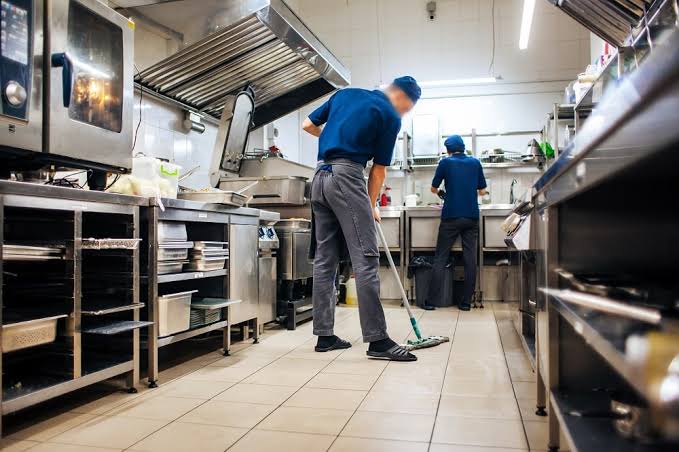
One-Time Commercial Kitchen Deep Cleaning
One-time service may be appropriate when:
- Opening a new restaurant
- Taking over an existing kitchen
- Reopening after construction
- Completing a remodel
- Preparing for an event
- Addressing neglected buildup
- Changing food concepts
- Cleaning after equipment replacement
- Preparing a closed facility for use
Recurring Commercial Kitchen Cleaning Services
Recurring service may be scheduled nightly, weekly, biweekly, monthly, or quarterly.
It helps prevent grease and grime from reaching the severe levels often found during one-time restoration projects. Recurring service also gives the business a predictable checklist, schedule, and quality-control process.
Several commercial providers market both ongoing programs and one-time deep cleaning, with options such as nightly cleaning, customized schedules, weekly or biweekly visits, and construction cleanup.
Benefits of Professional Commercial Kitchen Cleaning
Professional cleaning may offer several practical benefits.
More Consistent Results
A written checklist gives managers a clear way to confirm what the cleaners completed.
Access to Specialized Equipment
Professional providers may use floor machines, commercial extractors, steam systems, pressure equipment, extension tools, and specialized brushes that a restaurant does not keep on-site.
Better Control of Grease and Grime
Routine deep cleaning prevents residue from remaining untouched for long periods.
Cleaner Hard-to-Reach Areas
Professional crews can focus on corners, grout, walls, vents, refrigeration spaces, and areas behind movable equipment.
Reduced Pressure on Restaurant Employees
Kitchen staff can focus on food preparation, service, and essential daily sanitation while the professional crew handles agreed deep-cleaning tasks.
Improved Appearance
Clean dining areas, floors, equipment, entrances, and restrooms can support a more professional impression.
Support for Inspection Readiness
Professional cleaning may improve general cleanliness. However, it cannot guarantee a successful inspection because inspectors may also evaluate food temperatures, storage, pest activity, employee hygiene, equipment condition, records, plumbing, and many other factors.
How Much Do Commercial Kitchen Cleaning Services Cost?
There is no universal rate because providers price work according to the facility and requested scope.
Cost factors may include:
- Total kitchen size
- Number of rooms
- Number of appliances
- Grease and soil level
- Equipment accessibility
- Floor type
- Grout condition
- Service frequency
- Number of cleaners
- Overnight scheduling
- Water and drainage access
- Refrigeration cleaning
- Dining-room inclusion
- Restroom inclusion
- Hood or exhaust-system work
- Construction debris
- Wastewater recovery
- Travel distance
- Required chemicals and equipment
A recurring maintenance visit may cost less per visit than restoring a heavily neglected kitchen. However, businesses should compare the complete scope rather than choosing the lowest quoted price.
Ask whether the price includes:
- Labor
- Supplies
- Equipment
- Travel
- Waste disposal
- Moving equipment
- After-hours charges
- Taxes
- Emergency service
- Inspection reports
- Before-and-after photographs
In-House Cleaning vs. Professional Cleaning
Restaurant employees remain responsible for daily cleaning and food-safety duties. Hiring a professional company does not transfer all sanitation responsibility away from the operator.
Employees Usually Handle
- Immediate spill cleanup
- Food-contact surface cleaning
- Dishwashing
- Small equipment cleaning
- Trash removal during shifts
- Basic sweeping and mopping
- Closing procedures
- Food storage and labeling
Professional Cleaners May Handle
- Heavy floor degreasing
- Grout restoration
- Detailed equipment cleaning
- Behind-equipment cleaning
- High wall cleaning
- Deep refrigeration cleaning
- Upholstery and carpet work
- Construction cleanup
- Overnight cleaning
- Specialty exhaust-system service
The strongest approach combines daily employee procedures with planned professional deep cleaning.
How to Choose a Commercial Kitchen Cleaning Company
Request an On-Site Assessment
A provider should inspect the kitchen before preparing a detailed quote. Photographs alone may not reveal grease levels, damaged surfaces, drainage problems, or equipment-access limitations.
Get a Written Scope of Work
The proposal should identify:
- Areas included
- Appliances included
- Interior versus exterior cleaning
- Cleaning methods
- Products
- Visit frequency
- Estimated labor
- Exclusions
- Access requirements
- Quality-control procedures
- Price
- Cancellation terms
Ask About Insurance
Request evidence of appropriate general liability, workers’ compensation, and any other insurance required for the work.
Review Training and Safety Procedures
Ask how employees are trained to handle:
- Cleaning chemicals
- Hot surfaces
- Sharp equipment
- Electrical hazards
- Slippery floors
- Personal protective equipment
- Food-contact areas
- Equipment shutdowns
OSHA notes that restaurant cleanup may expose workers to hazardous chemicals, burns, cuts, slips, and electrical risks. Employers using hazardous chemicals may need a written Hazard Communication program, employee training, labels, and access to Safety Data Sheets.
Confirm Product Compatibility
Ask whether the products are suitable for stainless steel, tile, grout, paint, plastic, natural stone, rubber seals, food-contact surfaces, and other materials in the kitchen.
Ask About Quality Control
A reliable process may include:
- Supervisor inspections
- Digital checklists
- Before-and-after photographs
- Customer sign-off
- Corrective-action procedures
- Service records
- Regular account reviews
Clarify Hood-Cleaning Qualifications
When the scope includes a grease-exhaust system, confirm the provider’s qualifications, documentation, insurance, system access, and understanding of locally adopted NFPA 96 requirements.
How to Prepare for Commercial Kitchen Cleaning Services
Good preparation can reduce delays and protect food and equipment.
Before the crew arrives:
- Remove or cover exposed food.
- Empty agreed shelves and appliances.
- Clear portable equipment.
- Remove floor mats and lightweight racks.
- Secure knives and sharp tools.
- Identify damaged surfaces.
- Mark sensitive electrical equipment.
- Explain alarm and access procedures.
- Confirm water and drainage access.
- Restrict employees from active cleaning zones.
- Assign a manager to review the completed work.
- Confirm when food preparation can resume.
Do not disconnect gas, electrical, plumbing, or ventilation equipment unless an authorized person performs the work.
Sample Commercial Kitchen Cleaning Checklist
Cooking Line
- Clean stove surfaces
- Degrease grills and griddles
- Clean fryer exteriors
- Remove grease from splash zones
- Clean removable racks where included
- Wipe equipment controls carefully
- Clean floors beneath movable equipment
Preparation Areas
- Clean countertops
- Clean sinks and faucets
- Wipe backsplashes
- Clean shelves
- Remove residue from cabinet exteriors
- Clean table legs and bases
- Address wall splashes
Refrigeration Areas
- Clean handles and doors
- Wipe shelving
- Clean walls and floors
- Check door gaskets
- Remove visible spills
- Clean beneath movable racks
- Protect stored food
Floors and Grout
- Remove loose debris
- Apply compatible degreaser
- Scrub high-soil areas
- Clean edges and corners
- Extract dirty water
- Rinse when required
- Place warning signs
- Allow the floor to dry
Dining Areas
- Clean tables and chairs
- Wipe booths
- Treat carpet spots
- Vacuum carpets
- Mop hard floors
- Clean high-touch items
- Empty trash and recycling
Final Inspection
- Check for chemical residue
- Confirm floors are dry
- Confirm food-contact surfaces are ready for use
- Reinstall agreed items
- Photograph completed areas
- Document unresolved damage
- Obtain manager approval
Services That May Not Be Automatically Included
Never assume that a basic commercial kitchen package covers:
- Full hood and duct cleaning
- Rooftop exhaust fans
- Grease-trap pumping
- Drain jetting
- Pest control
- Mold remediation
- Biohazard cleanup
- Asbestos or lead work
- Equipment repair
- Gas-line disconnection
- Electrical work
- Fire-suppression-system service
- Refrigerant-system work
- Exterior dumpster cleaning
- Window cleaning
- Carpet cleaning
- Restroom restocking
Ask the provider to list every exclusion in writing.
Commercial Kitchen Cleaning and Allergen Control
Cleaning may help remove allergen residue, but no responsible provider should promise an “allergy-free” kitchen.
FDA research indicates that allergen removal can be affected by the type and amount of allergen, the surface material, surface texture, and the cleaning method. A wash-rinse-sanitize-air-dry process can help, but allergen control also requires ingredient management, separation, employee training, and verification.
Likewise, ordinary commercial cleaning does not automatically make a kitchen kosher. Kosherization can involve specific procedures, equipment treatment, timing, and rabbinical supervision.
Sustainable Commercial Kitchen Cleaning
Businesses interested in reducing environmental impact can ask providers about:
- Concentrated products
- Accurate chemical dilution
- Microfiber systems
- Low-water methods
- Wastewater recovery
- Reusable tools
- Recycling practices
- Fragrance-free options
- Products with recognized environmental certifications
- Energy-efficient equipment
However, “green,” “natural,” or “non-toxic” are broad marketing terms. Restaurants should still review the product label, Safety Data Sheet, food-contact directions, and surface compatibility.
Frequently Asked Questions About Commercial Kitchen Cleaning Services
Commercial kitchen cleaning services are professional cleaning programs for restaurants and other food-service facilities. They may include equipment cleaning, floor degreasing, wall cleaning, tile-and-grout work, refrigeration cleaning, dining-area cleaning, and other deep-cleaning tasks.
A deep cleaning may cover ovens, stoves, grills, fryers, floors, walls, counters, sinks, shelving, walk-in refrigerators, grout, and areas behind equipment. The exact scope should appear in the written contract.
The right frequency depends on cooking volume, grease production, operating hours, equipment, and daily cleaning quality. Some businesses use nightly or weekly service, while others arrange monthly or quarterly deep cleaning.
The time depends on the kitchen’s size, condition, number of appliances, service scope, accessibility, and cleaning method. A site inspection is the best way to estimate labor time.
Prices vary according to square footage, soil level, equipment, floor type, frequency, staffing, scheduling, and specialty work. Request an itemized site-specific quote.
Some providers offer sanitizing, but the method must meet applicable requirements. Businesses should confirm the product, concentration, temperature, contact time, rinsing instructions, and food-contact suitability.
No. Cleaning may improve general inspection readiness, but it cannot guarantee a result. Inspectors may also review food temperatures, storage, employee hygiene, pests, plumbing, equipment, and records.
Sometimes. However, visible hood cleaning is different from complete grease-exhaust-system cleaning. Confirm whether filters, plenums, ducts, fans, rooftop components, and documentation are included.
No. Steam may damage electronics, unsealed wood, thin plastics, certain paint, natural stone, seals, and damaged flooring. Always follow surface and equipment manufacturer instructions.
Cleaning may reduce allergen residue, but it cannot guarantee that a kitchen is allergen-free. Effective allergen control also requires separation, ingredient management, staff training, and verification.
Yes. Many providers offer nighttime or off-hours schedules. The restaurant should arrange access, alarms, utilities, equipment shutdowns, drying time, and reopening procedures in advance.
Ask about insurance, training, included tasks, exclusions, chemicals, Safety Data Sheets, food-contact procedures, cleaning methods, scheduling, quality inspections, documentation, and hood-system qualifications.
Yes. Professional cleaners supplement daily employee duties. Restaurant staff must still clean spills, food-contact surfaces, dishes, tools, preparation areas, and other areas required by the facility’s sanitation plan.
Final Thoughts on Commercial Kitchen Cleaning Services
Commercial kitchen cleaning services can help restaurants manage grease, grime, difficult flooring, equipment residue, refrigeration areas, hidden spaces, and front-of-house cleaning.
A strong program begins with an on-site inspection and a written scope of work. It should clearly identify what will be cleaned, how often the work will occur, which products and methods will be used, and what is excluded.
Most importantly, professional deep cleaning should support—not replace—the restaurant’s daily sanitation program. Food handling, temperature control, pest management, employee hygiene, equipment maintenance, and local regulatory requirements remain the operator’s responsibility.
When comparing providers, choose the company that offers the clearest scope, appropriate insurance, trained employees, compatible cleaning methods, reliable documentation, and a schedule that fits your operation.